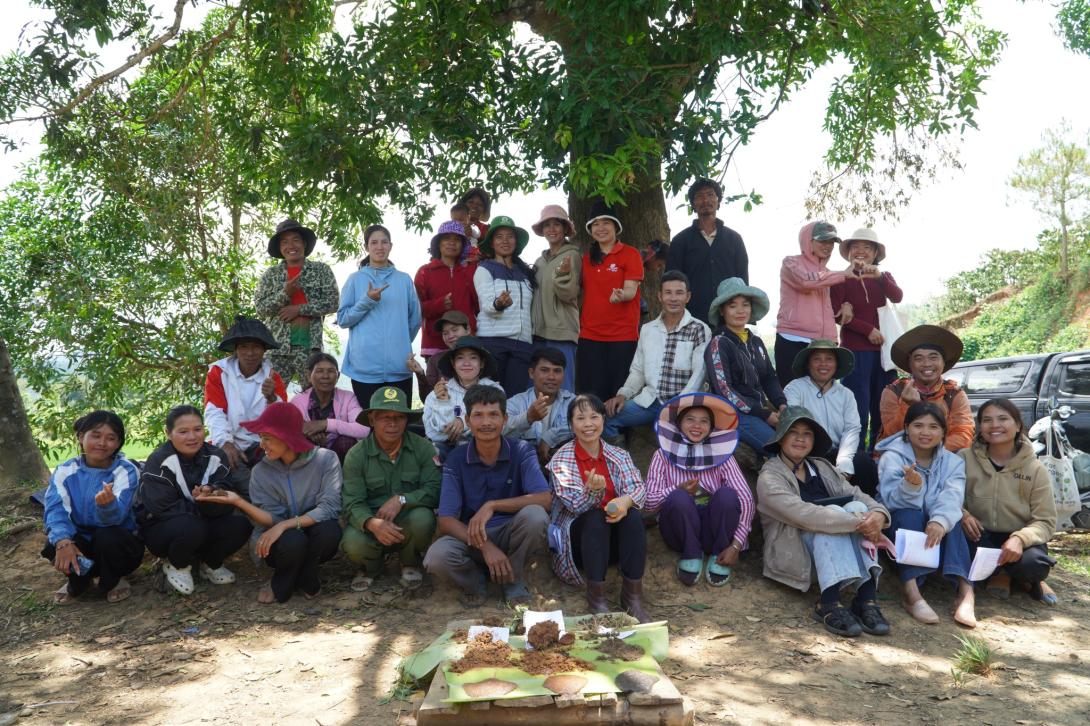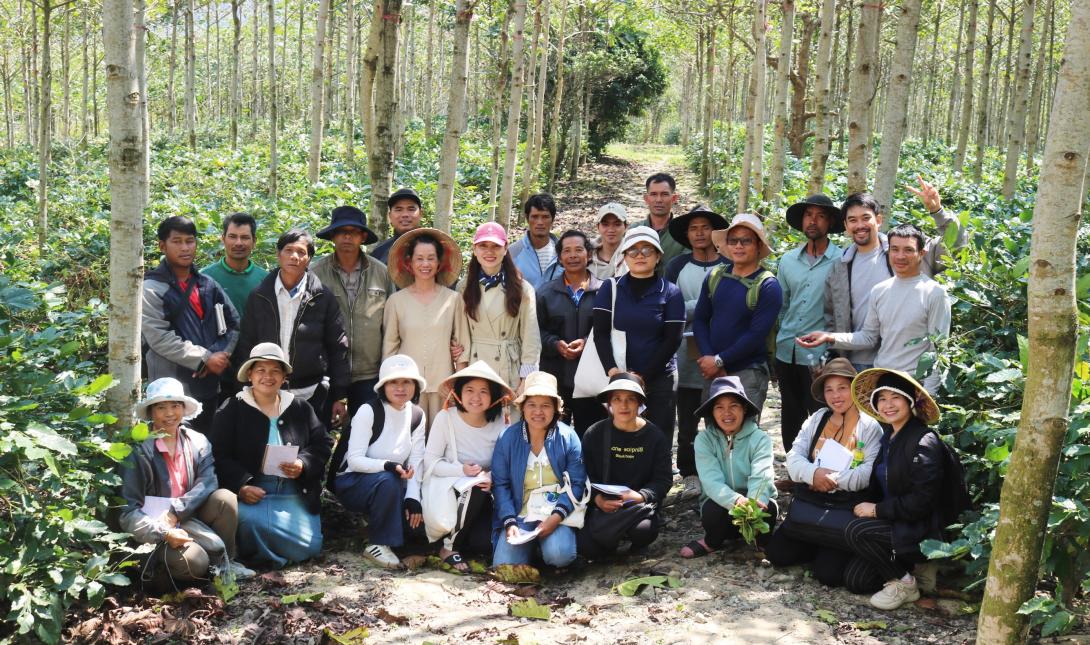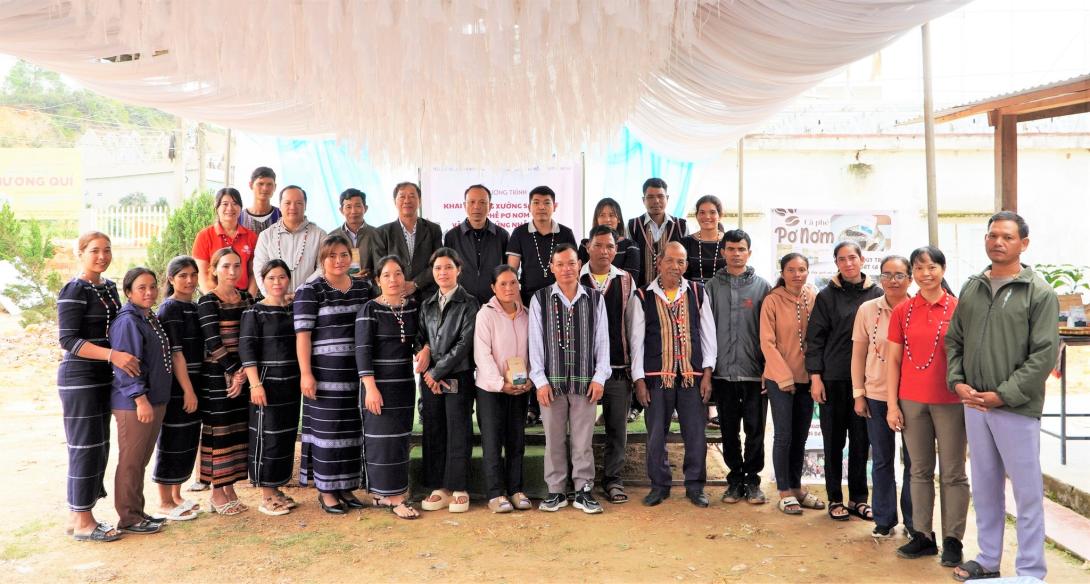

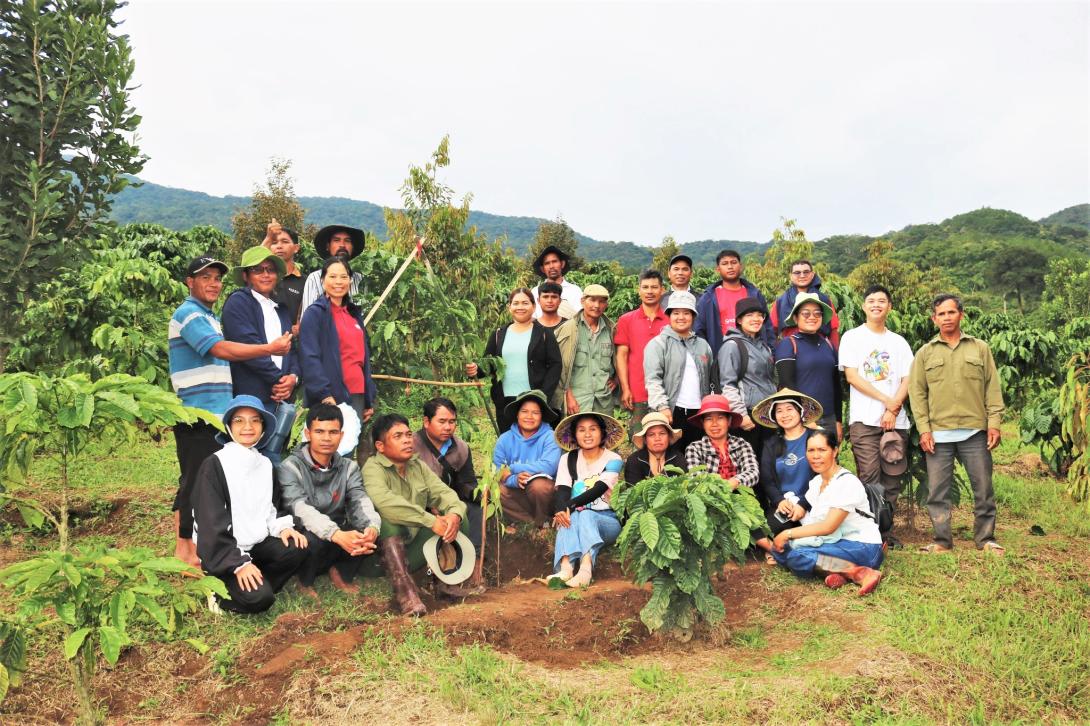
On June 19 and 20, in the Ta Ly plateau, the 2025 Ecological Agriculture Forum took place with the participation of nearly 40 members from Caritas Da Lat's ecological agriculture practicing communities: Dung K'no, BokaBang, Loc Tan, Ta Ly and Dinh Trang Hoa. Accompanying the people are 12 Caritas Da Lat staff and Mr. Nguyen Duc Su, a farmer with extensive experience in ecological farming.
The forum is an opportunity for people to learn from each other, give comments, analyze and make long-term plans for their natural farming journey.
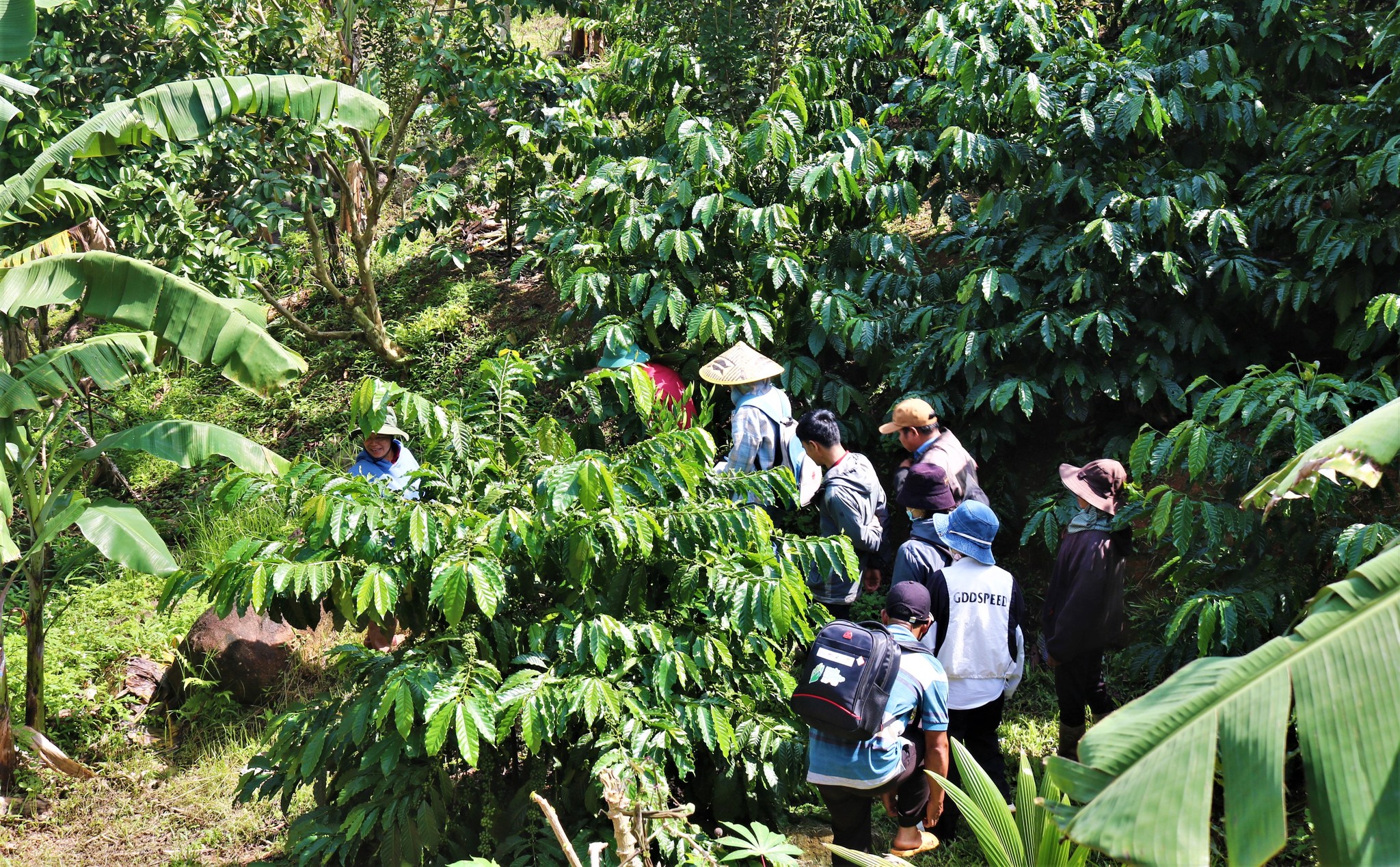
Day 1: Learning from the field
At the beginning of the forum, the delegation visited Bap Dinh's garden - a garden model in the process of ecological transformation. The garden has sloping terrain, is intercropped with many types of trees such as avocado, durian, coffee, mango, forest trees, macadamia trees... and has fish ponds and available natural water sources.
Here, people come together to observe reality and give many valuable suggestions, especially on:
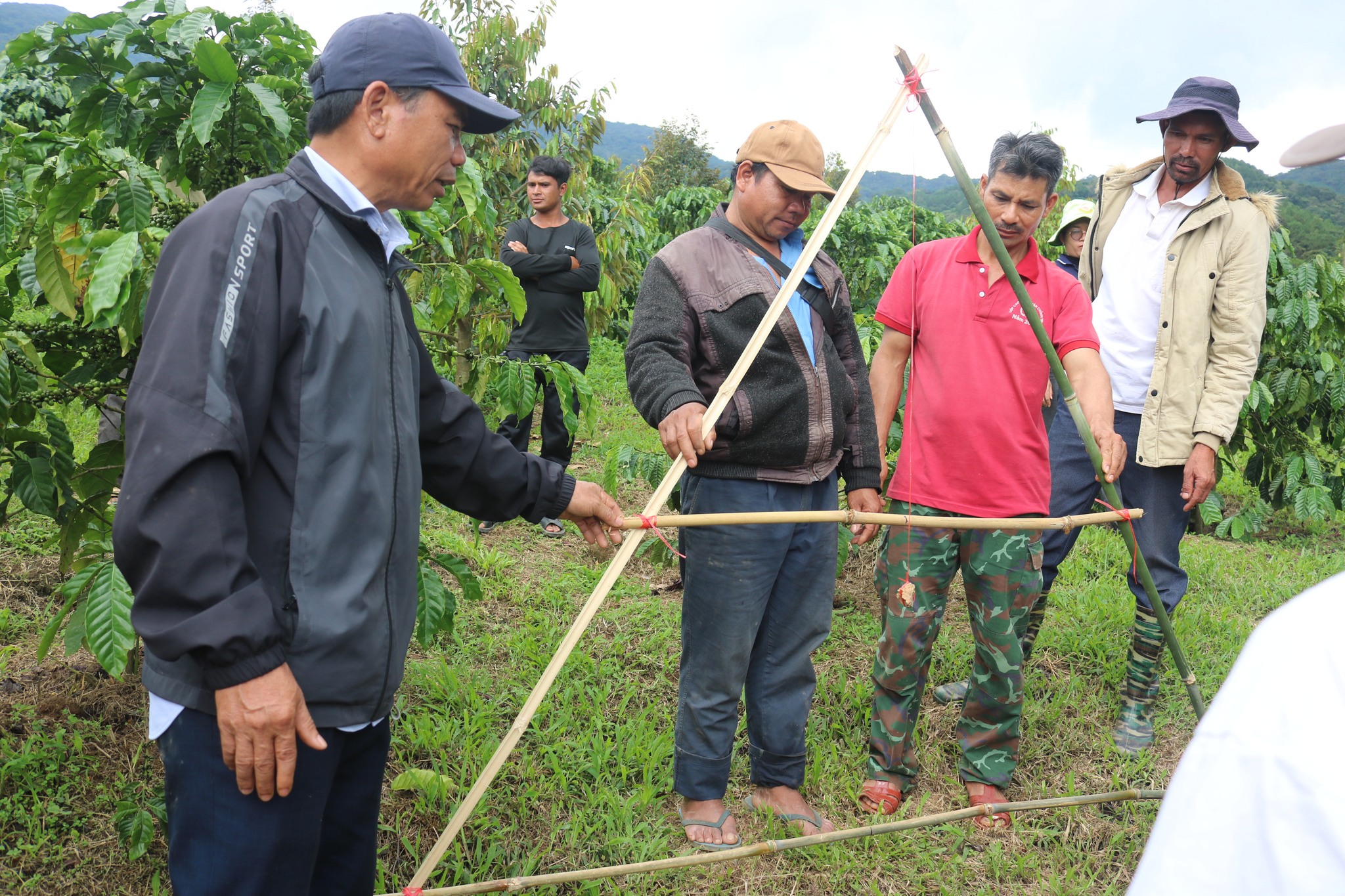
- Garden planning on sloping land: Mr. Su instructs how to measure and make contour lines, how to dig holes to plant trees to preserve soil and prevent erosion. Contour lines need to be planted with forestry trees alternately to retain water and distribute nutrients effectively. People also suggested that we need to plant trees to block wind and toxic fertilizers on the eastern edge.
- Clean water source: There should be a barrier around the garden to prevent polluted water from flowing in. "The garden really needs water but absolutely does not need dirty water" - At the same time, change the location of the hut - take advantage of the terrain to reuse domestic wastewater.
- Reduce chemical dependence: According to Mr. Su, once fruit boosters and chemical fertilizers are used, the tree will become "addicted to the drug" and demand more and more. The renovation needs to go slowly - on average 5 years for the tree to completely regenerate.
- Multi-layer canopy garden and beekeeping: This is a model that benefits biodiversity, especially ideal for beekeeping because of its rich food source and better quality honey. Besides forestry crops, short-term crops such as ginger, gourds, etc. should also be intercropped.
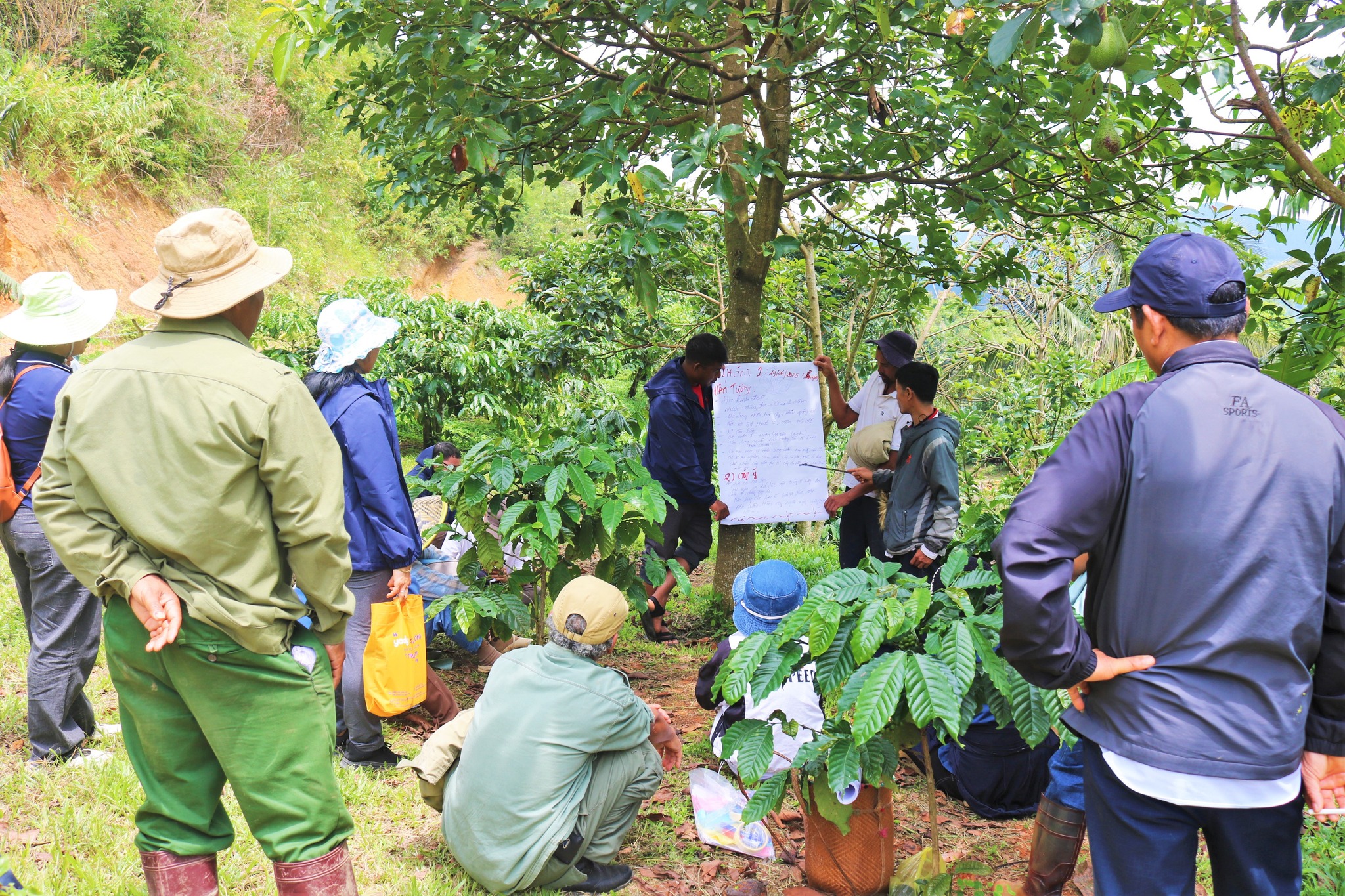
The value of native varieties and community nurseries
A highlight of the first day was the conversation surrounding native plants. When enjoying the fragrant native jackfruit given by the villagers, Mr. Su shared: native jackfruit is not only delicious but also has comprehensive economic value - from the fruit, seeds, peel to the tree trunk, all can be used.
People are also well aware that native varieties are stronger, live longer, adapt well to the climate and require little fertilization. Therefore, building a community nursery is very important. The good news is that the Ta Ly community has a small nursery where everyone shares seeds and learns how to grow plants. The community is also looking towards a future that does not depend on seedlings from outside sources.
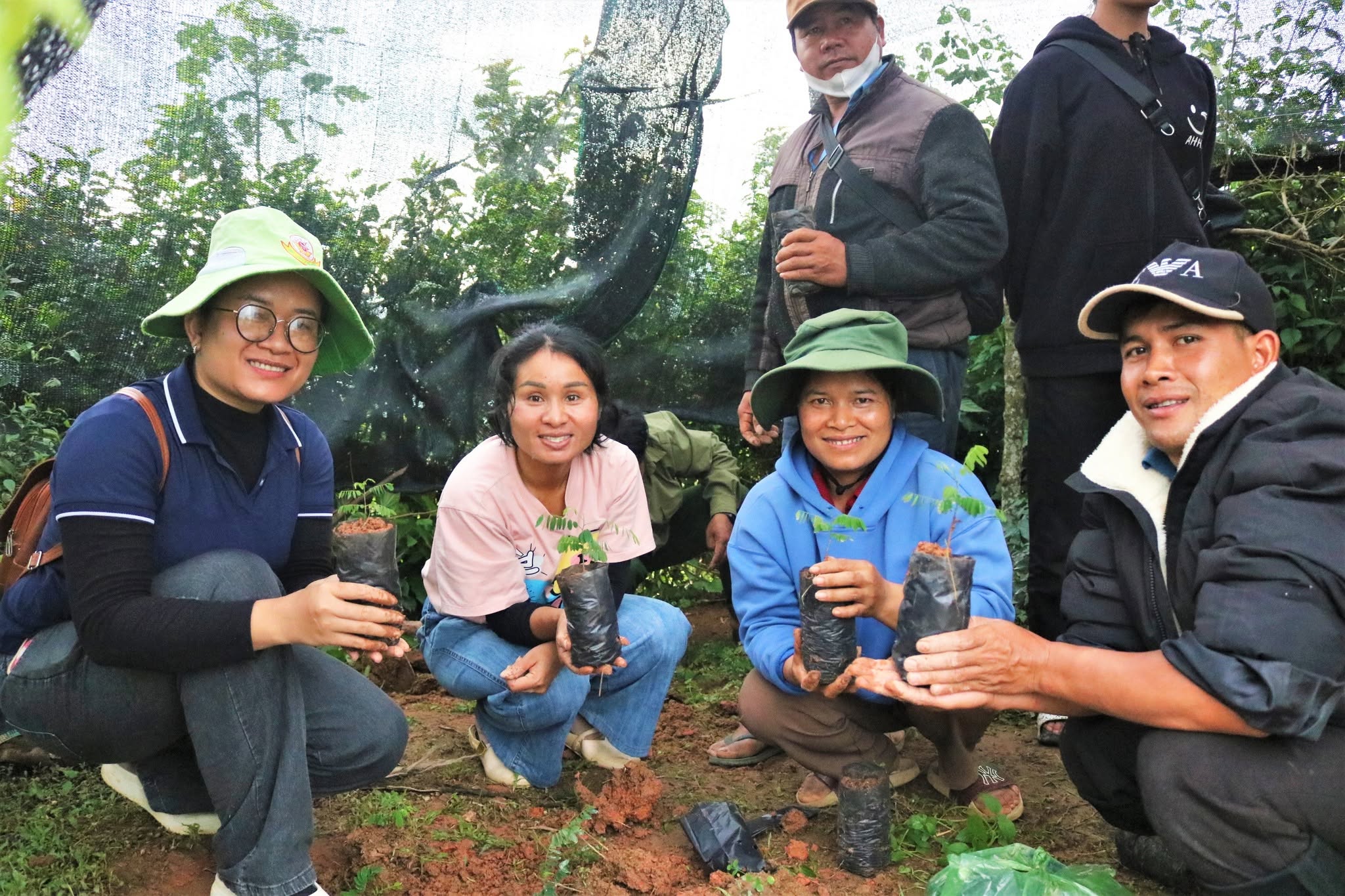
Day two: Share – Listen – Plan
The second day is a valuable sharing space from households who have practiced ecological agriculture for the past 6–7 years:
Sieng Garden - Shaping the ecology since 2017
From a 2-hectare coffee garden converted in 2017, Mr. Sieng shared his challenging journey: being criticized by relatives and neighbors for going against modern agricultural trends, patiently learning to live with pests instead of destroying them, and at the same time he also completely cut down on chemical fertilizers.
As time passed, the garden gradually revived. In the early days, even though the fruits were in full bloom and there were no customers, he still happily harvested them and gave them to the people in the village. To this day, Mr. Sieng's garden has customers coming to buy, the upstream water is enough for irrigation, the plants are healthy, and the products are clean.
Mother Hoang's garden - Sweet fruit after 7 years without herbicides
Changing direction from 2018, Hoang's mother's garden no longer sprays herbicides, and gradually cuts down on chemical fertilizers. Hoang's mother shared: "After cutting down on chemical fertilizers, the garden began to welcome the return of monkeys and wild boars" - a clear sign of ecological recovery. The fruit trees in the garden also grow quickly, the hand-grafted passion fruit tree also bears heavy fruit, and the greatest joy is that she gradually understands and appreciates the value of her own work. Hoang's mother's wish is to reduce overtime hours and have more money to take care of the garden better.
Conclusion and long-term orientation
Mr. Su concludes with 5 basic principles to grasp when starting an ecological journey:
- Overall observation: Your garden and the area surrounding the village: forests, fields, houses, water sources, land...
- Geographic interaction: Sun, wind, directions...
- Identify advantages: people, resources, markets...
- Discovering potential: Economic, social, ecological...
- Choosing the right model: How to plan the garden, what plants to grow more, what plants to plant less - allocation according to ecological slices
After the tutorial, households are instructed on how to keep a farm diary, monitor weather, pests and crop development. Each household also began to make short and long-term plans, committing to putting what they learned into practice.
The forum closed in trust and a spirit of connection. From small gardens, from personal stories - a network of ecological farmers is gradually growing. "Planting trees today - is buying insurance for future life."