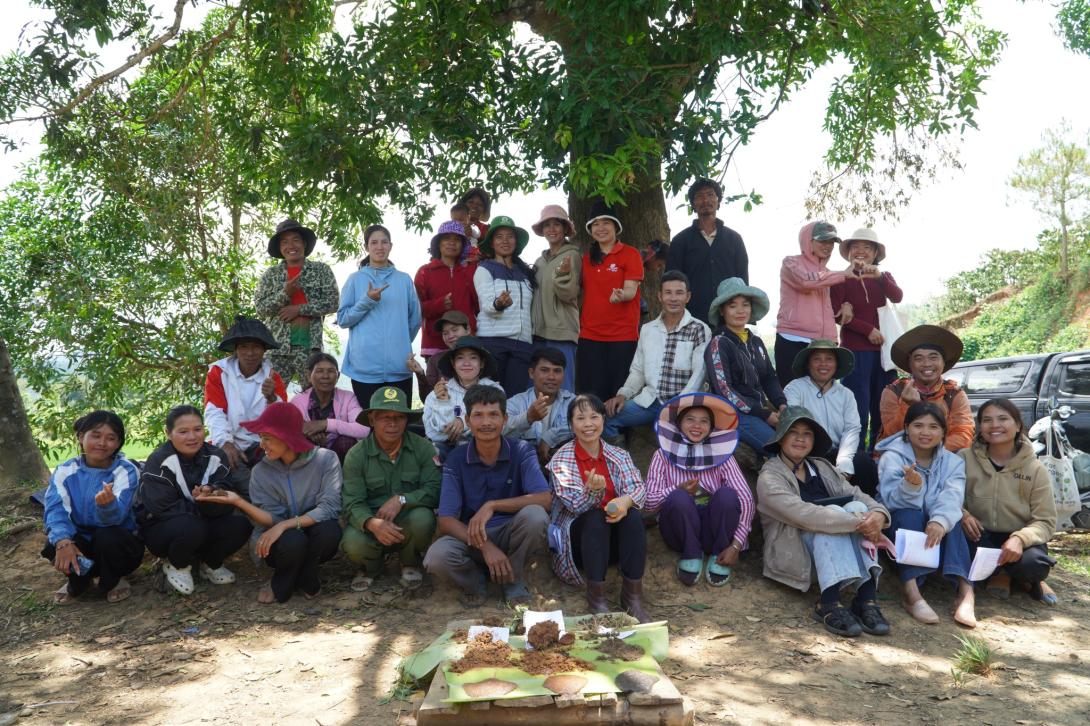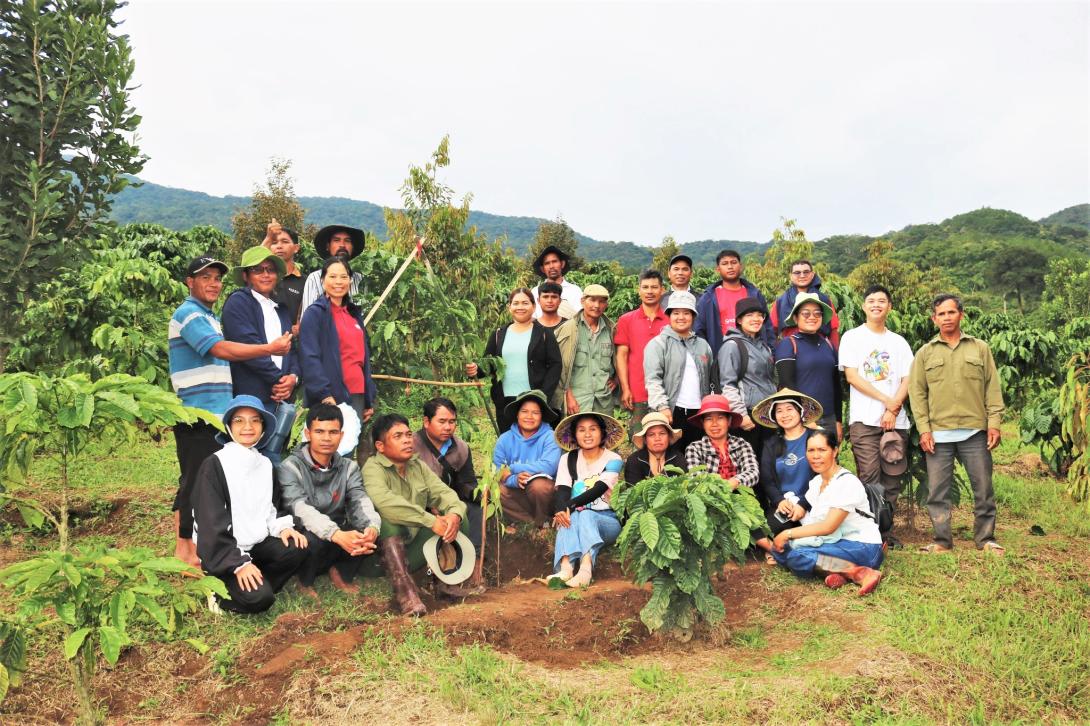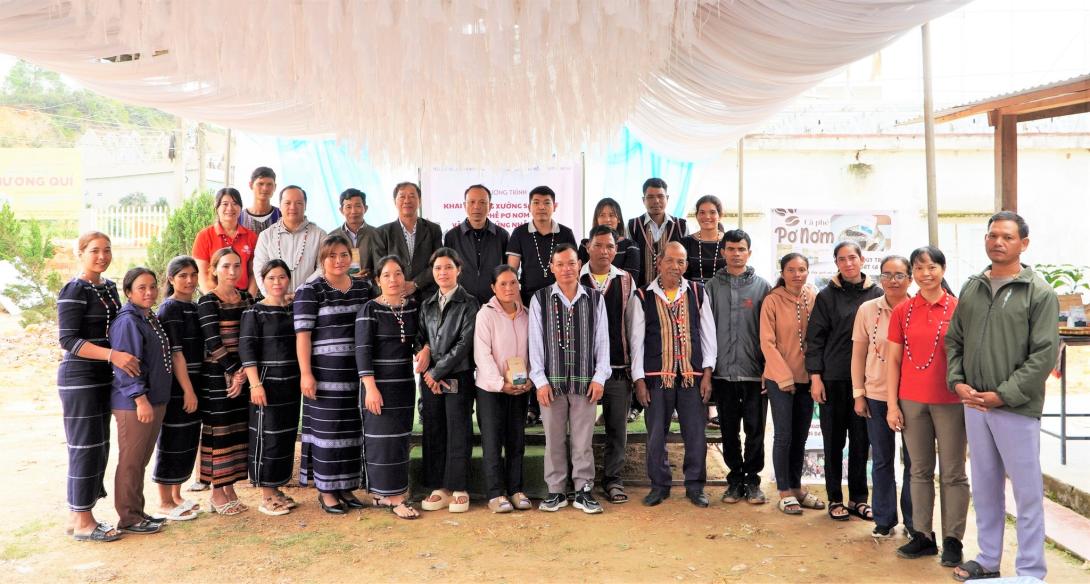

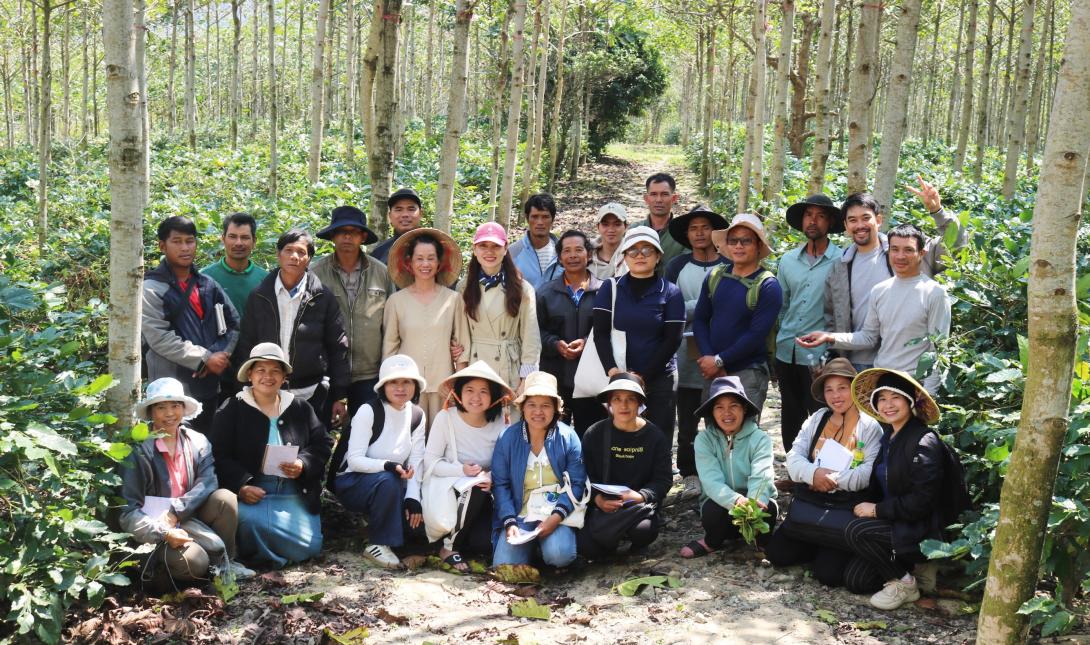
We have met the people, the forests, the integrated, multi-crop, multi-layered ecological gardens, the will, energy and pure life of those who choose ecological agriculture as their motto. The good lessons learned during the trip have inspired many people.
Patience, the child of Hope, nourishes Hope
When converting from chemical to organic, plants will initially be very weak and unable to adapt to the new environment. It took Madam Huong at An Viet Farm, Cop village, Thuong Phung, Huong Hoa, Quang Tri to convert nutrients from chemical to organic for her coffee garden, taking up to 3 years. The first year the tree is weak, the leaves turn yellow and fall off, after 3 years the new leaves become green again and thicker. Without patience and hope, Madam Huong will not be able to recover after losing 12 billion to the fertilizer garden. The result the family reaped today is the An Viet farm coffee brand with special coffee products grown under the canopy of a dipper tree and a special post-harvest fermentation method to produce a unique flavor. The owner also has a son who helps his mother market the product in Saigon with a selling price of 1,500,000 VND/kg.
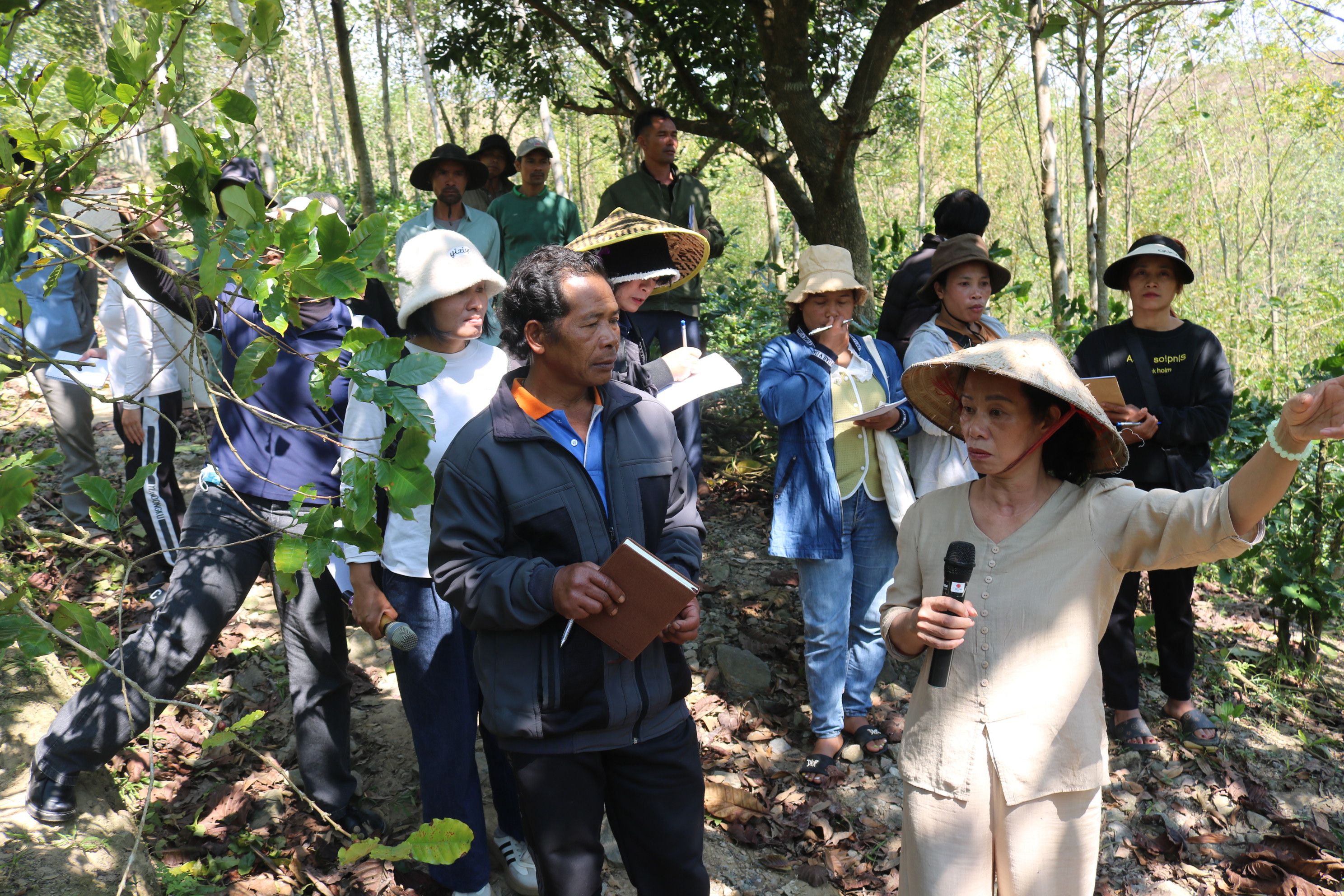
Ms. Mai Thuy Huyen, Tan Tien village, Cao Quang commune, started converting to ecological agriculture from land that had planted acacia twice. With sandy soil and harsh weather in Quang Binh, she first planted jackfruit, banana, and lychee orange trees under the mother tree (a native lychee tree left over from the past). Because the ground was sandy, to improve the soil, she dug a long hole, put a lot of fertilizer in the hole, added a thick layer of branches and leaves on top and started planting. In summer, with temperatures sometimes reaching 43 degrees Celsius, she has to stay up all night to catch 2-3 buckets of water at a time. The saplings also have to give each other: one day this tree gets to drink 1 cup, then the next day it has to endure to give to some other people who have not yet had a drink. Through the first summer, her plants gradually got used to the harsh local conditions. After 3-4 years, fruit trees no longer need to be watered because the roots have penetrated deep into the soil to absorb water and nutrients. When the conversion started, there was a whole 'group of protesters' - they were relatives and loved her. They were afraid that she would suffer, so they advised her to give up the ecological path of 'staying' in the garden and rarely interacting with anyone. Sometimes she has to close the garden door to avoid being disturbed, but 'people keep calling to stop her,' she shared. But with the will of a single mother, no labor, no capital, and the farming blood inherited from her parents' genes, she remains steadfast, clings to the garden and loves the garden.
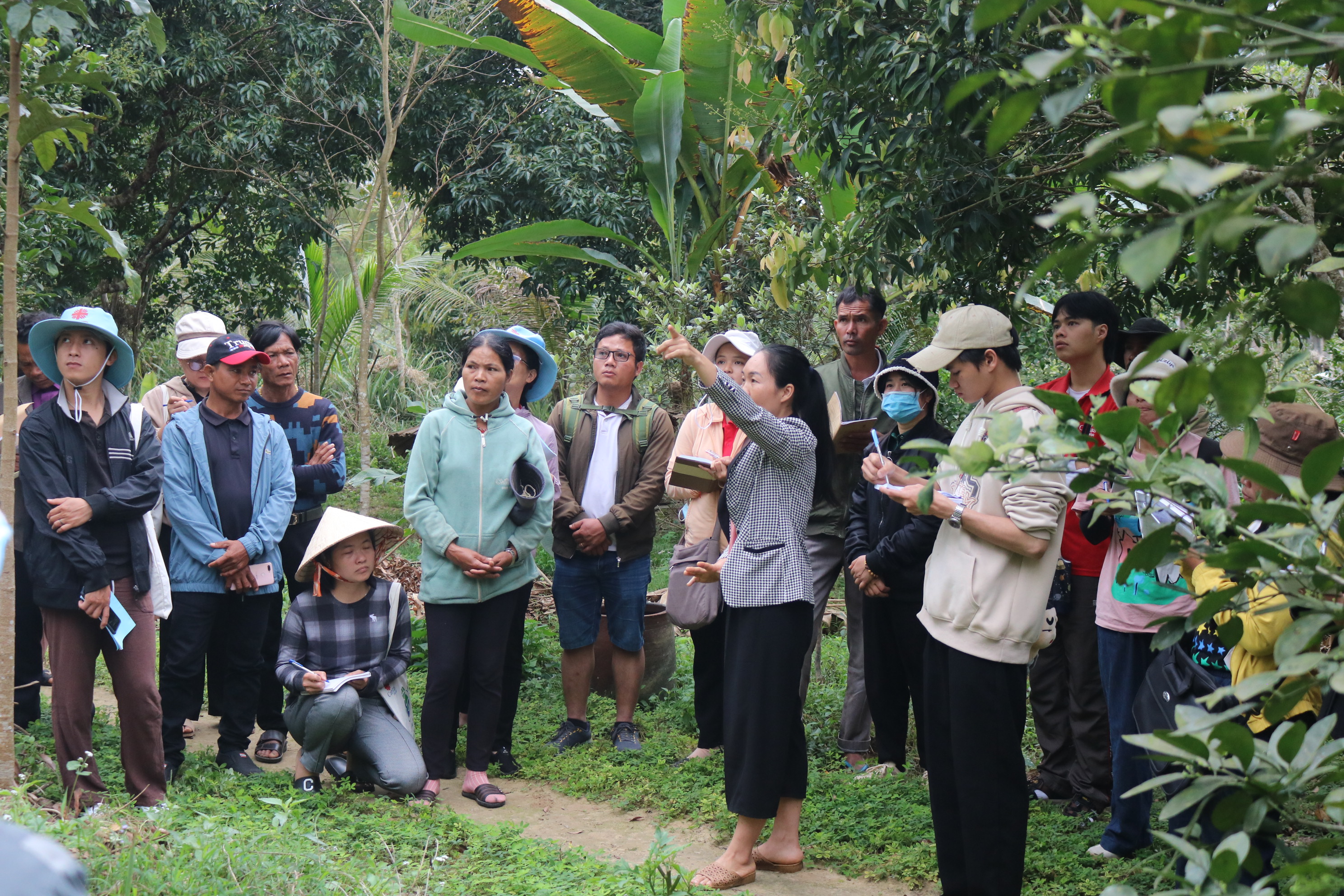
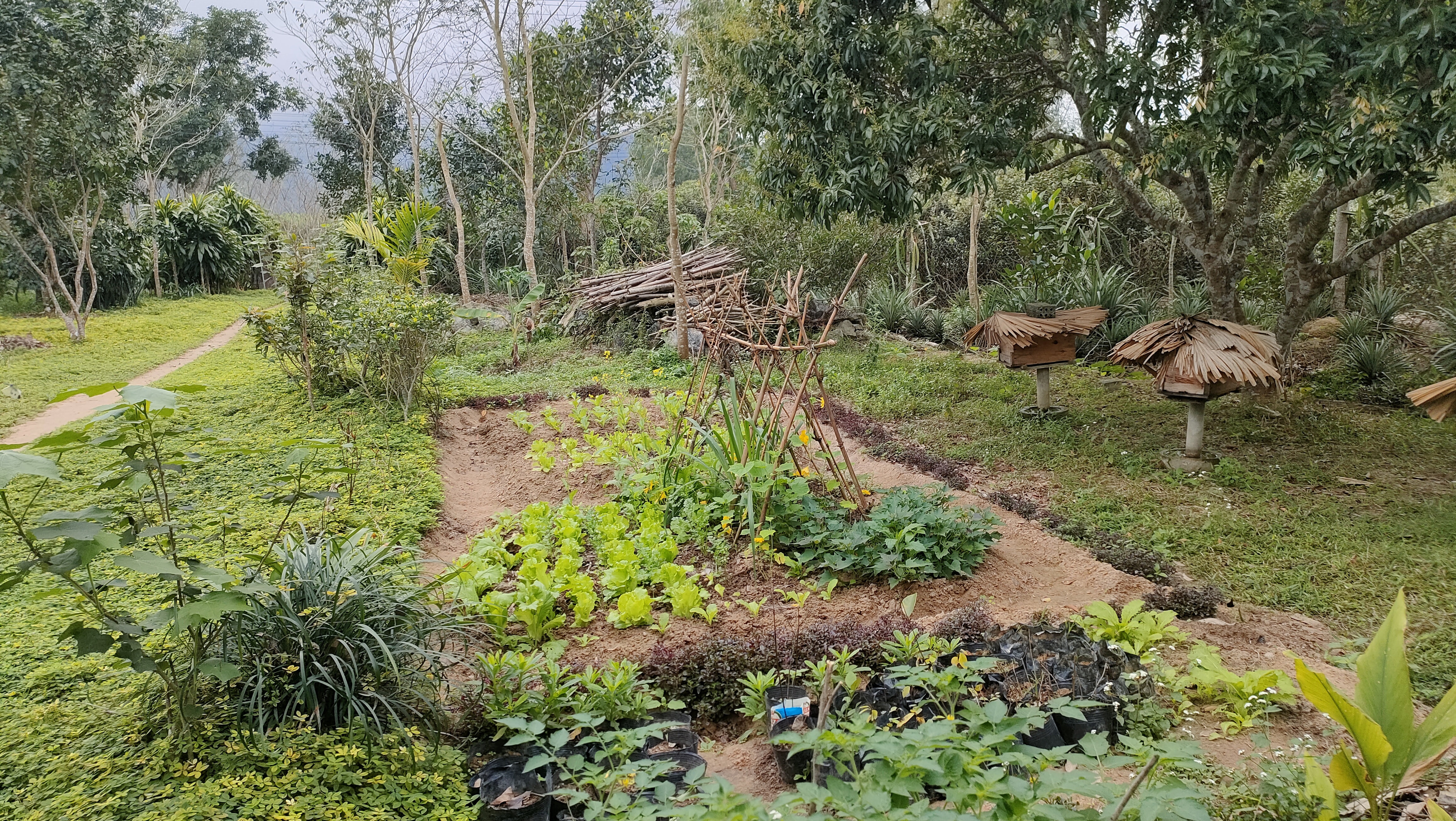
Visit Uncle Minh's house, Phu Minh village, Lien Trach commune. With the ground full of rocks, year after year, he picked up rocks and piled them into slopes to block the land along contour lines, revealing bare ground and planting trees on it. The solid talus banks help retain soil and nutrients to feed the pepper trees that he learned about, experimented with and cared for for many years.

"This land is full of rocks, no matter where we plant them, the trees die. In the summer, the rocks in the soil are too hot. I planted 100 forest trees, but only 2 live trees," the owner of An Ma rest stop shared. The myrtle tree is the only native tree that can survive here. They are grown, cared for, and sold fresh, soaked, and dried under the name of a cooperative of 7 member farmers. 'There was a time when I asked for a divorce and left my husband to work in the garden. The whole family stopped her because they didn't want her daughter to go into a remote area alone,' she shared. Now, the husband is here, helping cut the grass and helping with the gardening. Some surviving forest trees, buckwheat flower beds, myrtle hills as well as fish ponds and flocks of chickens, geese and sheep create a poetic ecological landscape that is the result of 6 years of persistent efforts of this young owner.
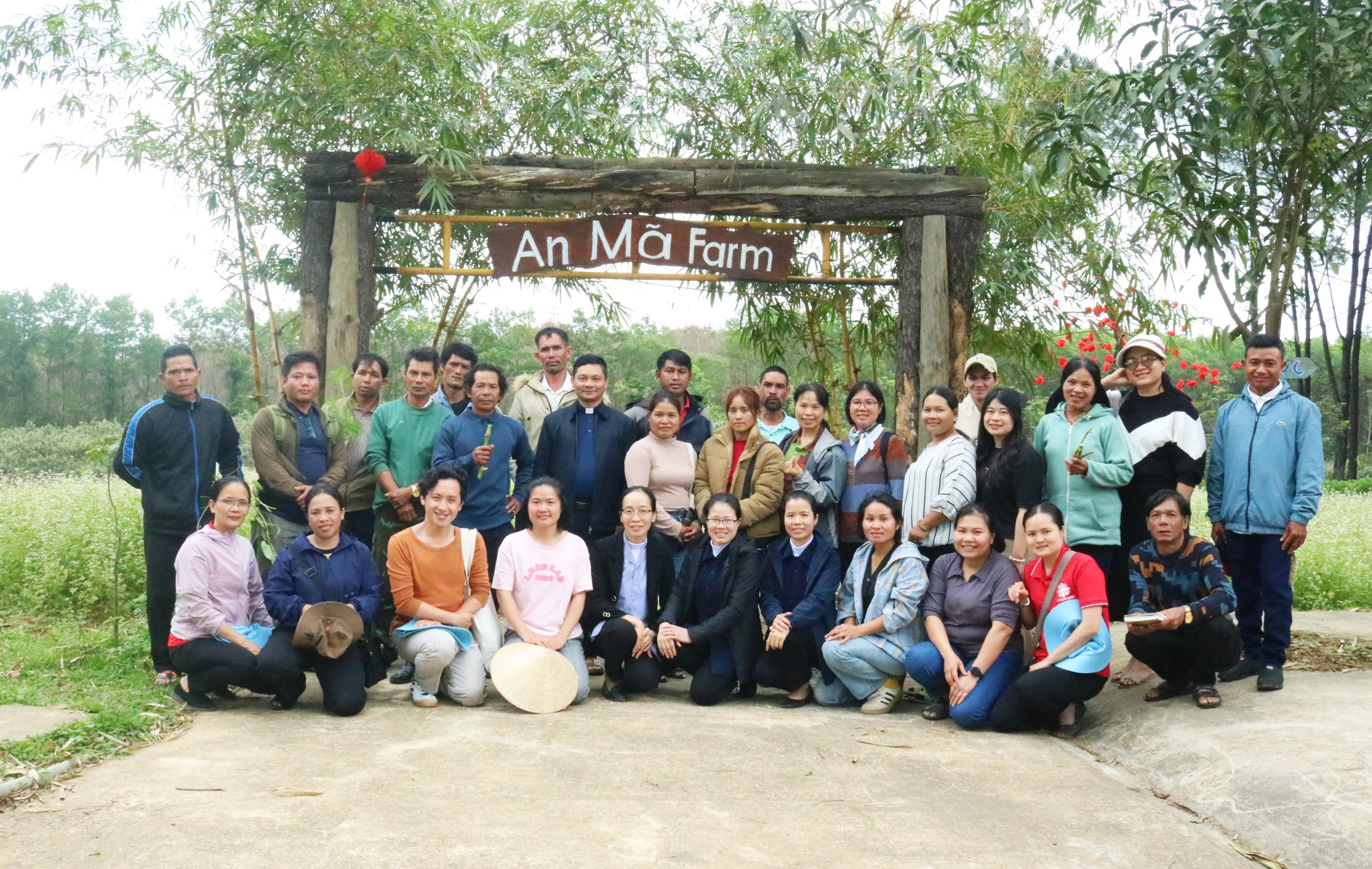
Indeed, it is the hope for a future of ecological agriculture that brings life to all species that has created the patience, resilient spirit, and hard work of these people. And it is this patience that continues to nourish the hope of the farmers themselves and those inspired by them.
People feed the land, land feeds the trees, trees feed the people
We must always keep this principle: "People feed the land, the land feeds the plants, the plants feed the people"', shared by Uncle Phuoc, a 73-year-old, agile and sturdy old man in Xuan Trach commune, Bo Trach, Quang Binh, who is still clinging to the soil and garden to create clean ecological gardens. The reason why the two old grandparents have a few hectares of land is because when they first came here in the 90s of the last century, the neighbors in the surrounding area left because the US was littered with cluster bombs. After burning, the couple picked up cluster bombs in the garden every day, carrying heavy burdens to dump the bombs into the ravine. 'She waited until his figure disappeared into the crevice, then she felt secure to continue her work,' Mrs. Phuoc confided. When starting to plant trees, every day the couple gathered leaves from the nearby acacia forest, carried them back to the cupboard, and carefully placed a thick layer around the base of the newly planted young tree. Every day, each tree also gets to drink a cup of water that he carries from the stream to be able to survive the harsh summer. And now, after more than 30 years of diligence, the grandparents have a lot of things to collect all year round: green vegetable gardens that are watered in the winter-spring, ginger, turmeric, lychees, pepper, Dong algae chickens, pigeons, geese, ducks... All are produced from the remaining 3,000 m2 ecological garden after dividing it among the children. This garden has been renovated and cared for by the couple as if they were a child. It is true that 'people feed the land, the land feeds the trees, the trees feed the people'.
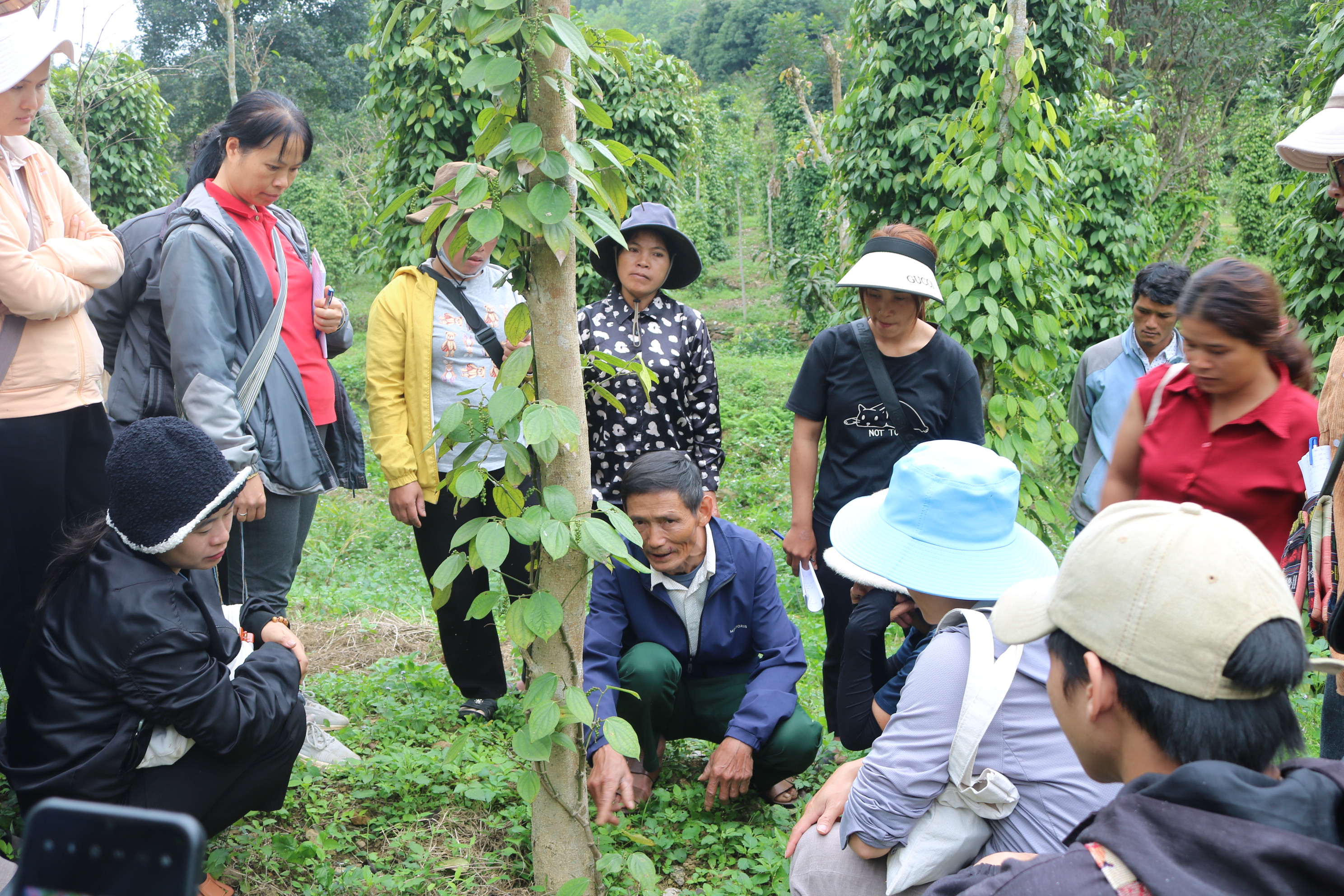
Ecological agriculture: people and creatures living in harmony with nature, the value of indigenous varieties
Madam Huong shared: "When you go to the forest garden, multi-crop, multi-layer canopy, the temperature there will be 2-3 degrees cooler than the temperature at home." In Ms. Huyen's garden, she does it wherever needs to be weeded, otherwise she leaves it alone to create balance. The grass makes her ground cooler. It also helps disperse the focus of pests on the main plant species in the garden. Beekeeping is a regular source of income and is very good for an ecological garden. Bees also help pollinate fruit trees. Flowers from large trees and weeds are good food sources for bees. Ms. Huyen allows all species to live together in her garden: worms, leafhoppers, ants, there is no need to chase them away because each species has its own role.
Designing the garden so that the plants can receive maximum light and harvest rainwater is one of the secrets to the success of an ecological garden. In the direction of the rising sun, short trees will be planted in the east so that the plants in the garden have the opportunity to absorb maximum morning light, tall trees will be planted in the west to block the ultraviolet rays of the afternoon sun.
Also depending on the slope of the land, farmers will dig at-grade ditches to retain rainwater and not let it flow out of the garden. Crops are also planted on contour lines. Making stairs along the contour is also a way to retain water. However, the cost of scooping the soil is high, the amount of fertilizer and organic matter required is large, and the time to restore the soil is long because the surface nutrient layer has been scraped away.
Mr. Su also sincerely shared with the people: "Native nurseries are really necessary for ecological farming. Every soil has that tree. Just be passionate, collect and mark trees in the forest, wait for the season when the seeds fall, then pick them up for nursery." Mr. Su, Ms. Huyen, Bac Minh and many other gardens have applied the principle of planting native seedlings in ecological farming. They only order native seedlings once from neighbors, then gradually propagate the branches to a larger area based on their abilities: how much strength they have, how much investment they have. Ms. Huyen likes to plant from bare-root trees (pulling seedlings that sprout from nature) because these trees are strong, have a survival rate of over 90% and are indigenous varieties. Of course, farmers must take more care of their seedlings than their children in the early stages.
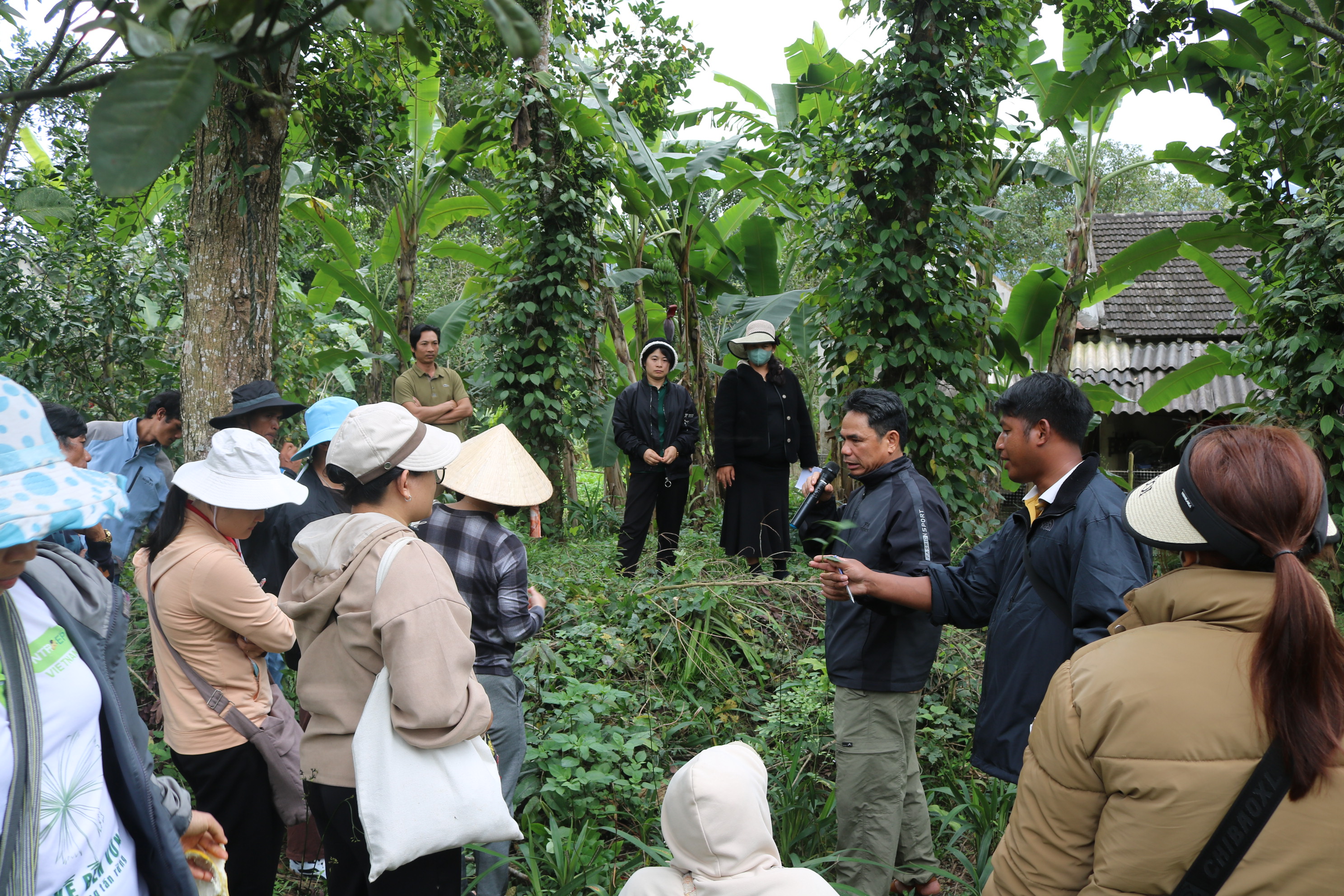
There is no such thing as a wild plant. Everything has value, no excess
When converting from a monoculture acacia garden to an ecological polyculture garden, Mr. Tien and Cao Quang kept the sloping ground with the remaining forest trees intact, did not destroy the land, and did not burn. When planting a new tree, he only digs a hole on the contour line, and the surrounding shrubs are lowered down to create a thick layer of cabinet material around the base. Shrubs on the contour lines are also retained to prevent nutrients from leaching. These trees become a natural nursery that helps newly planted seedlings get shade and breathe the cool air around them. He also doesn't apply manure. The soil base and cover layer are enough for plants to develop roots in depth to absorb nutrients from the soil. In this way, Mr. Tien's tree adapted quickly and became lush. You only need to water it during the first summer. In the second year, the seedlings can absorb water and nutrients from the fertile topsoil that is retained and added.
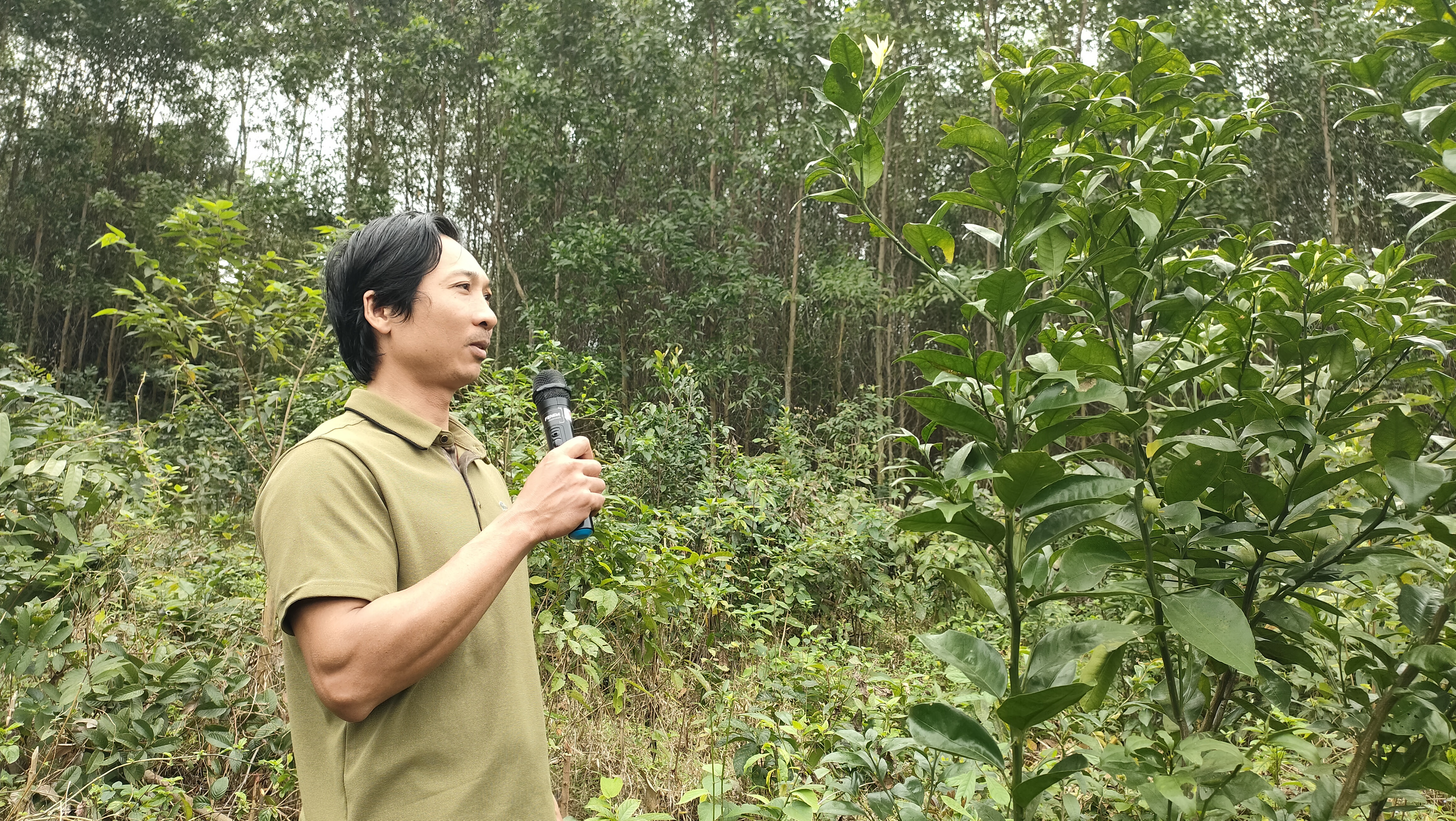
In Mr. Su's garden, there are about 50 different species. Native forests on the top of the hill, fruit trees and water reservoirs halfway up, vegetable gardens and nurseries below. 50 bee colonies are spread from top to bottom. His garden is like a huge warehouse of medicinal herbs, any plant found on the land has its uses: tea tree, five-skin, moringa, ground ginseng, tall ginseng, ginseng, Crinum latifolium, wild five-skin, polyscias fruticosa, lizard egg vine, honey plant, peach tree, toad grass, dogwood tree, ancient black taro, galangal tree, crow's nest tree, .... In his garden, nothing is a weed, everything has value, he shares.
The economy is just enough, people live peacefully, satisfied with the present
'If anyone gives me 50 million, I won't be as happy as when I sell 10 million of the products I made with my own hands', that's the confession of Mr. Minh, Phu Minh village, Lien Trach commune. "One day, if I don't go to the garden, I miss it so much and can't stand it. The vegetables here grow a little and I lose my appetite!", he added.
Doing natural agriculture means you gain some years, you lose some years. You need to plant multi-crop crops and multi-layer canopy to have this to compensate for the other, taking the short term to feed the long term. Just try planting for 1 year, and if you see good results, then plant more. In particular, the principle of forest gardens: 30% of the hilltop must be kept forested and planted with native trees. This is the water source that supplies the entire area below. Once the forest is cut down, the water source will be lost.
No outside investment, even in buying manure, must create a circular economy in the forest garden: livestock provides manure and reduces weeds; Forests provide leaves and water; Everything nourishes the land, the land nourishes the plants, the plants nourish the people. There must also be many different sources of income from many types of crops, animal husbandry, beekeeping and even from harvesting and selling leaves/pine cones in November in preparation for the Christmas season which also helps diversify the source of livelihood for an ecological farmer.
Ecological farmers never go into debt, live just enough and are at peace with what they produce. When others are looking for a value to live by, they will find them. Inspirational stories will be spread. Organic natural musk scent!
If you want to go fast, you have to go slowly
According to natural laws, seedlings grow slowly, slowly but with a long and durable lifespan. If you want the plant to bloom quickly, add nitrogen. Seedlings bought from nurseries have been living in a nutritious, aristocratic environment. When brought and planted in people's fields that are not well cared for, they will easily die, especially when farmers do not have the time to plant them. If people have an on-site nursery and care for them in poor conditions, the seedlings will get used to suffering and can easily adapt to the harsh environment. In addition, people can actively plant whenever they have time and when the weather is suitable for planting.
'I went to study pepper growing in many places, as far as Dak Lak. There, people use a lot of fertilizers and chemicals. Pepper trees initially yield the most in the 3rd and 4th years, and by the 6th and 7th years, they have begun to wither. I don't follow it, I do it myself in my own way of ecological farming, slow but durable. My pepper can be harvested up to the 15th year, after which the yield will decrease. As for households who only plant a few roots, they can eat for up to 30-40 years', that is Mr. Minh's share.
Invest in future generations
Ecological farmers are people who not only see what is immediately beneficial, what brings tangible income for themselves. Investing in ecology is investing in the future, investing in a community and a larger society.
Ms. Huyen never uses an automatic irrigation system because doing so will drain the upstream stream. She also limits automatic pipe laying because it will produce microplastics in her garden.
"I never apply chemical fertilizer because it will seep and pollute the water source down there, where I and many other farmers raise ducks," Mr. Minh shared.
To answer the question of the people from Lam Dong: ‘Why don't you install a bigger pipe to bring water from the source to your garden?’ Mr. Su, the tour guide for the group, replied: ‘The water source is just that, a bigger pipe will drain the water source.
Pilgrimage of the Pilgrims of Hope
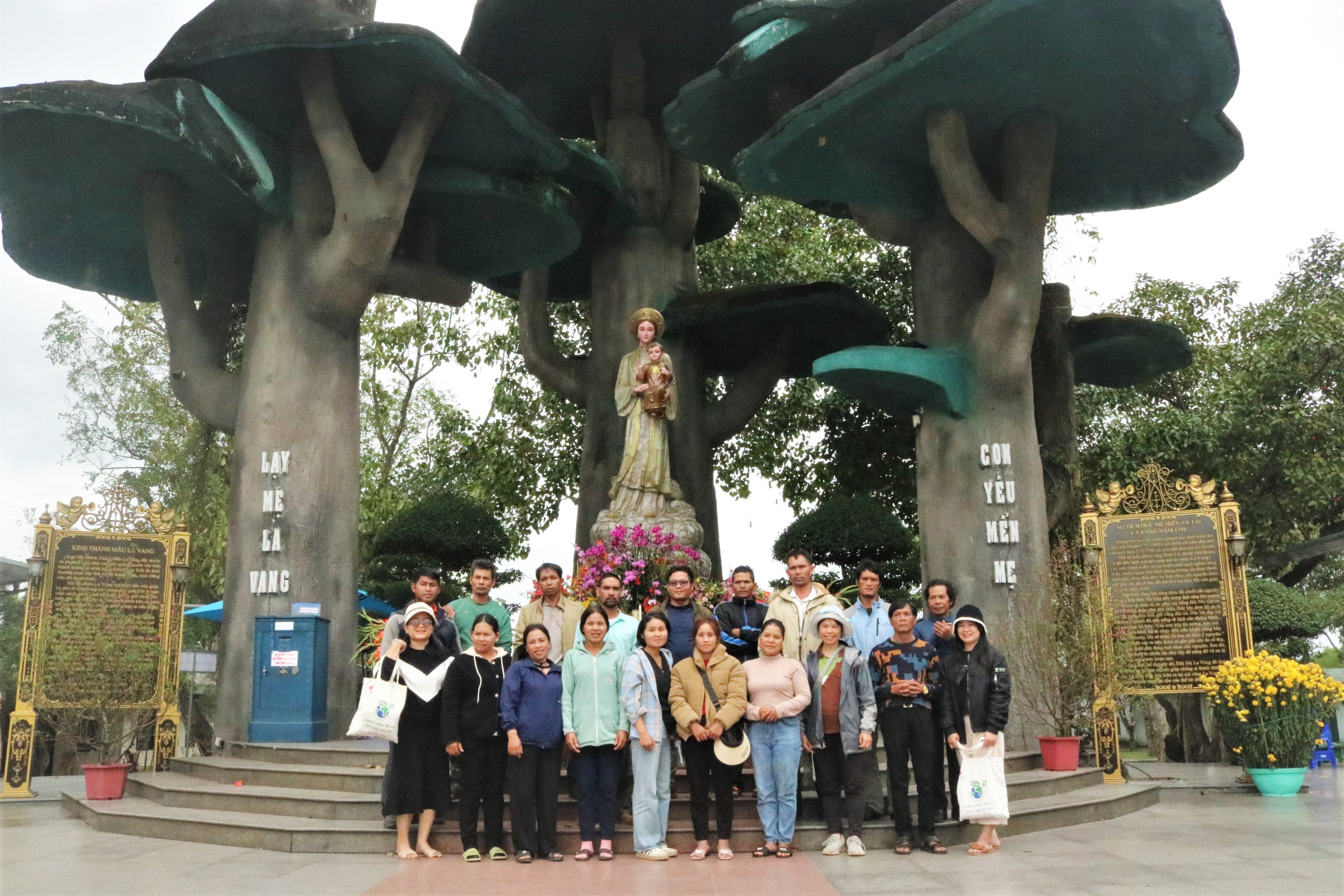
The trip ended with the hope of farmers who are in the process of converting to ecological agriculture in Lam Dong. The inspiration to preserve forests, preserve land, and preserve the environment for future generations continues to motivate farmers and Caritas Da Lat staff. "When you go to visit the model, you have to do it right! Just do it and then from time to time we will meet each other, share experiences with each other and tell stories of change to motivate each other to continue moving forward", that was the confession of a member on the trip. All the dreams of everyone in the group were finally offered to Our Lady of La Vang as filial children standing at her feet. Please become the morning star that guides our steps and protects us on the path of building Hope for our families, communities, society, father earth and future generations.
Grace Phuc