
1. Gặp gỡ Đức Ki tô
Through commitment to serving the least brothers and sisters, people will meet Christ himself, and in Christ people will meet God who is the source of love, because "loving others is the way to God, and turning our backs on others will make us blind and unable to see Him" (cf. TCLTY, no. 16).
Caritas members are first of all people conquered by the love of Christ. Starting from their encounter with Christ, they can give this love to their fellow brothers and sisters through acts of charity.
2. Be organized
Love of neighbor originates from love of God. It is first of all the responsibility of each Christian, but also the responsibility of the entire Church community. Therefore, love also needs organization, if it wants to become an orderly service to the community. And that is why the Church established Caritas. Therefore, the Church is the subject directly responsible for charitable activities. Caritas is an organization of the Church that aims to arouse awareness of charity and love in everyone in society, thereby leading to practical activities to help each other (see TCLTY, no. 20).
- Caritas International => Holy See - National Caritas => Conference of Bishops - Diocesan Caritas => Diocesan Bishop - Parish Caritas => Parish priest
3. Professional training
Following the example of the parable of the Good Samaritan, charitable activity with a Christian character is first of all a direct response to an urgent need in a specific situation: Those who want to serve those who suffer need to be professionally trained: helpers must be trained, so that they can take the right actions at the right time and continue to care.
4. Đào luyện con tim
Although professional ability is necessary and basic, that alone is not enough. The service of Christian charity is aimed at people, and people always need something more than technical care. They also need human love. They need the attention of the heart. Therefore, these helpers, in addition to professional training, also need heart formation: they need to be guided to meet God in Christ, this encounter will awaken love in them and open their hearts to others, to the point that love of others is no longer for them a commandment imposed from the outside, but a continuation of faith. It is that faith that operates in love (TCLTY, no. 31a).
5. Không phải là cách chiêu dụ tín đồ
Charity is given freely to specific people, especially to those living on the margins of society, regardless of skin color, race, language, religion, or politics. However, it is not a means to attract followers. -- Love is gratuitous, it is free: love is not done to achieve another goal.Whoever works in charity in the name of the Church, never seeks to impose on others the Church's beliefs: He must know that love in its purity and impartiality is the best proof of God, in whom we believe and who moves us to love. Christians know when they can talk about God and when they should be silent and only talk about love. That person knows God is Love, and that right now He is present when love is realized and not in anything else.
II. The appearance of someone who practices charity:
1. Humility
They must always be convinced that the ability to help others is a gift from God, not their own merit and career, so Caritas members must always follow Jesus' example of living humbly: "We are useless servants" (Luke 17:10). This correct way of serving will make the helper more humble. They do not put themselves in a higher position than others, even if that person is in a miserable situation right at this moment. Christ chose the ultimate place on earth - the cross - and precisely in that radical humility, he saved us and helped us move forward.
Anyone who is in a position to help others must realize that at that moment they are also being helped and that their ability to help is not their own merit and career. This responsibility is a grace. The more a person serves others, the more they understand Christ's words and apply them to themselves: "We are only useless servants" (Luke 17:10). Because they realize that it is not because of a superior's duty or because of a great personal effect, but because God has given it to them as a gift.
2. Prayer:
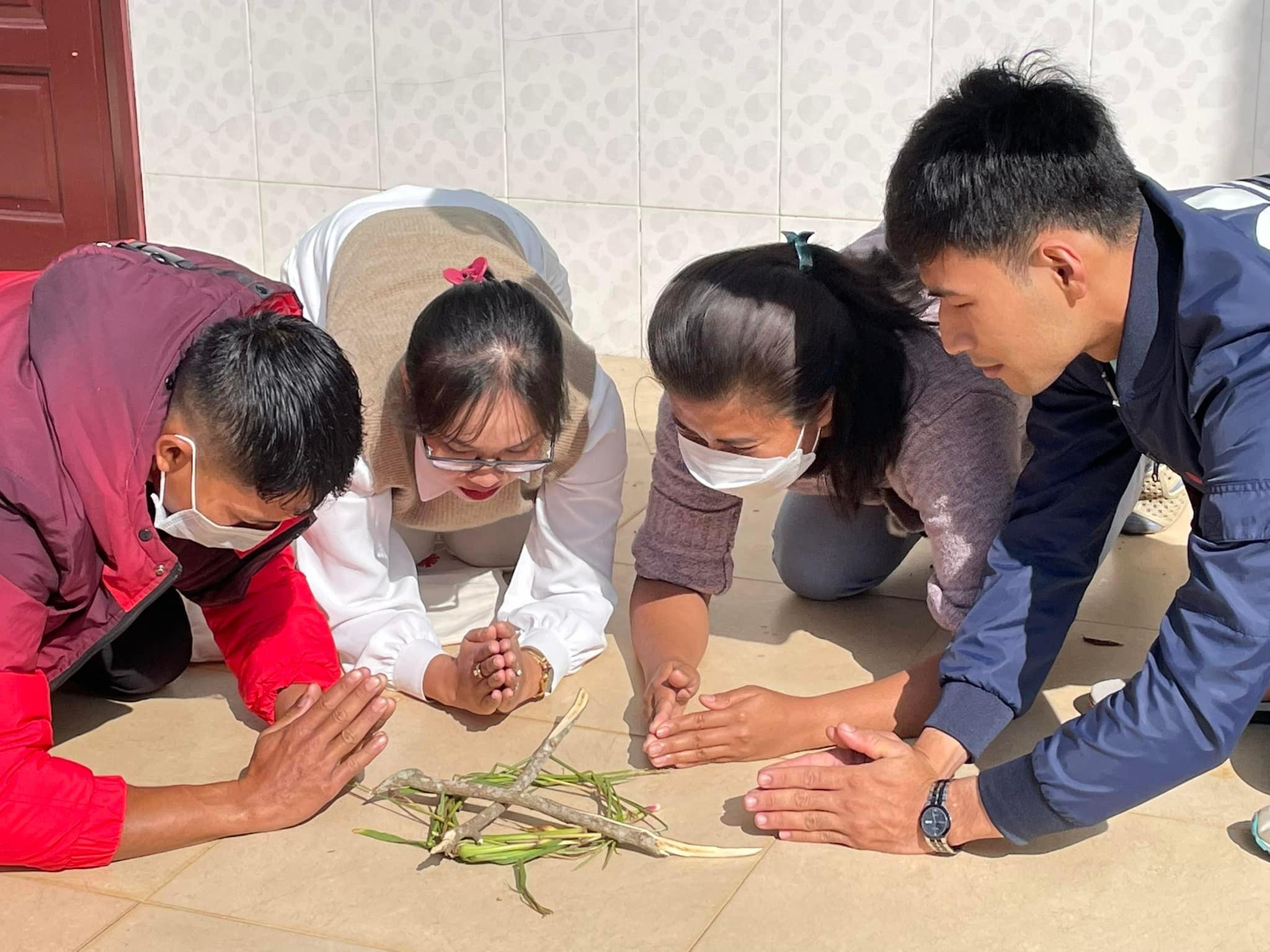
They are the tools that God uses to bestow His love. To do so, they need to know how to pray and stay close to God through liturgical and sacramental life (see TCLTY, Nos. 22, 25, 32).
Prayer is the way to find new strength from Christ; Here prayer becomes a concrete urgent request. Those who pray will not waste their time, even when the situation is urgent and seems to compel us to act. Morality does not weaken the fight against poverty or the destitution of others.
Blessed Teresa of Calcutta is a clear example of this. He said: "Time spent with God in prayer not only does not harm the concrete activity of love for others, but is in fact an endless source for that activity".
It is time to reaffirm the importance of prayer in the face of the activism and secularism that threatens many Christians to engage in charitable work. Christians pray with no intention of changing God's plan, or perfecting God's providence. Rather, they seek to meet the Father of Jesus Christ and implore Him to be present in them with the consolation of the Holy Spirit and in their work. (TCLTY 36&37)
Conclusion
Saint Paul shows us the immutability of love in the eschatology. When we meet God face to face, faith and hope are no longer there, only love remains.
Because God is Love and God is eternal, whoever abides in love abides in God and will not be destroyed, as St. John said: "He who does not love remains in death" (1 John 3:14). What we do with true love will last forever and make us more and more like the image of God.
Each of us is called to discover the true meaning of life and each day fulfill the vocation of love that we are following by practicing charity. Future time is not in our hands, only the present moment is ours.
So let's live in love.
(Summary) Caritas Dalat Office