
Seeds: Farmers' Rights, Lives & Future

“Seeds: rights, life and future of farmers”
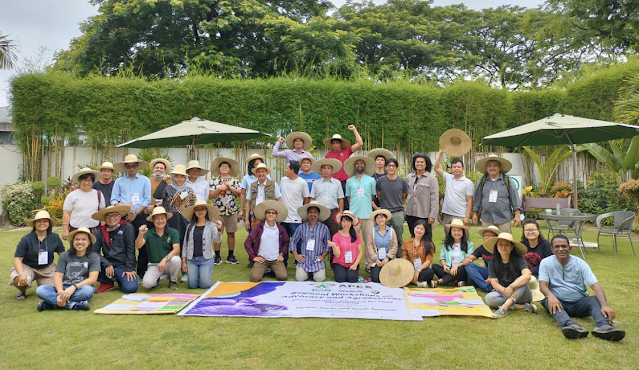
That's what I concluded from the course "Seeds and Seeds Systems" from August 1 - 3, 2022 in the province of Nueva Ecija, Philippines. This is a course within the framework of the APEX - Asian People's Exchange for Food Sovereignty & Agroecology forum and is co-organized by MASIPAG and PANAP for more than 30 members from organizations working with farmers from the countries of Bangladesh, Cambodia, India, Indonesia, Nepal, Philippines and Vietnam.
Seeds – the right of farmers
After the introduction and warm-up performance to help connect members, the course began with a presentation by a member from PKMT - Pakistan. The presentation emphasized that seeds are the foundation and basic human right.
Since the first green revolution when hybrid varieties were introduced to the market as a solution to improve productivity to solve world hunger. This is like a narrative that opens the way for humanity. However, from the beginning, the world ignored the downsides of the green revolution. Hybrid varieties will be accompanied by monoculture planting and the use of chemical fertilizers, leading to farmers being dependent on buying seeds and fertilizers from outside.Changing farming methods also leads to many consequences such as land degradation, polluted environment, and affected human health. And more importantly, the world's ecosystem is increasingly poor and gradually destroyed. According to research by FAO, within 100 years from 1900 to 2000, 75% of the world's indigenous varieties disappeared.
Farmers from the role of mastering their own lives, cultivating what feeds themselves and the world, have now switched to working for fertilizer agents, seed agents, and multinational companies. Changing from people who have the right to decide their own lives to people who depend on the decisions of multinational companies. A new way of life was formed and new conflicts turned people's lives upside down.
Faced with that situation, members from other countries also have the opportunity to share stories from their country. The truth shows that all farmers in all countries experience the loss of local varieties due to the invasion and selection of new varieties and hybrid varieties. Along with that comes dependence on multinational companies. Farmers and especially small farmers lose their freedom and instead profits go to big companies. In the process of taking action to regain ownership of seeds, people have encountered many challenges such as the monopoly of agricultural material supply corporations, their own financial borrowing, people's lack of capacity in marketing, policies supporting modern agriculture, the climate crisis, etc.
On the other hand, stories about individuals and communities around the world were also spread during the conference. These are stories about fighting to maintain the rights of farmers through reviving local seeds and reviving local culture. This is the motivation for us and the farmers to be more confident in the fight to regain farmers' rights.
Seeds - the life of farmers
On the second day of the workshop, we were taken to visit MASIPAG's backup farm (Backup Farm). Backup Farm was formed out of a desire to fight the green revolution and regain the rights of farmers. We were really surprised to see that more than 2,000 pure rice varieties are stored here. Rice varieties do not need chemical fertilizers during cultivation. And it's even more surprising to know that more than 700 rice varieties were created by farmers themselves.
At Backup Farm, MASIPAG employees and farmers have saved seeds by conducting rice test farms year after year, documenting information and building a data management system. MASIPAG has regional branches nationwide to accompany farmer organizations to carry out experimental farms in their own localities. The role of farmers in the seed system is: conservation, maintenance, multiplication and selection. People switched from using hybrid varieties to using purebred varieties, from dependent farming methods to active input and market farming methods.
At Back-up Farm, we visited the rice field of more than 20,000 square meters, the office and the rice seed storage warehouse (seed bank). All are designed very reasonably for the farm's purposes. In addition, we also experienced the feeling of farmers when going down to the fields to weed by hand. The activity seemed to be just to change the atmosphere of the training course, but it allowed me to feel the pride of farmers and the value of purebred seeds grown organically. The grasses pulled up from rice fields are also the vegetables used to prepare meals. Ah! It turns out that people's life and food sovereignty originate from local seeds.
In addition, forum participants divided into 3 groups to share about how to restore local seeds and contribute to food sovereignty? All three groups have applied all of their own experiences and knowledge and those of communities around the world to answer this question. On the one hand is standing up to fight against multinational companies in the world of seeds and fertilizers. On the other hand, it is easy to see local seed recovery activities surrounding the areas of food, culture, local festivals and seed management.These are building seed banks, building communities that work together, changing farming methods, raising awareness and capacity for farmers, seed festivals, etc. Through the presentations of the 3 groups and going back to the first day of stories from the communities, we realized that seeds are the life of farmers. Or to put it more simply, seeds are the farmer's life
Seeds – the future of farmers
On day 3, we visited an experimental farm of the Barangay Warding farmers' organization. There are 5 community organizations here. Previously, they were founded for the purpose of socio-economic development, but later cooperated with MASIPAG to work more in the fields of policy advocacy, sustainable agriculture, and technology. In 2013, this farmer organization began implementing a pilot model to select and store rice varieties. Currently in the community there are 106 households cultivating rice varieties provided by MASIPAG using organic methods.
After hearing about the community, we were taken to visit their experimental farm. The testing team had 18 members and tested 50 different rice varieties. After the test season, they will select 10 rice varieties with the most outstanding advantages for households in the area to register to plant in their fields.
When we hear what farmers here share, we feel proud of the activities they are doing. See the value of cultivating traditional rice varieties. When farming, farmers do not have to worry about investing in buying seeds and fertilizers. Products sold are also priced by the farmer group based on costs and customers. If the family cannot sell all of its products on its own, groups will work together to connect additional resources to support product sales.
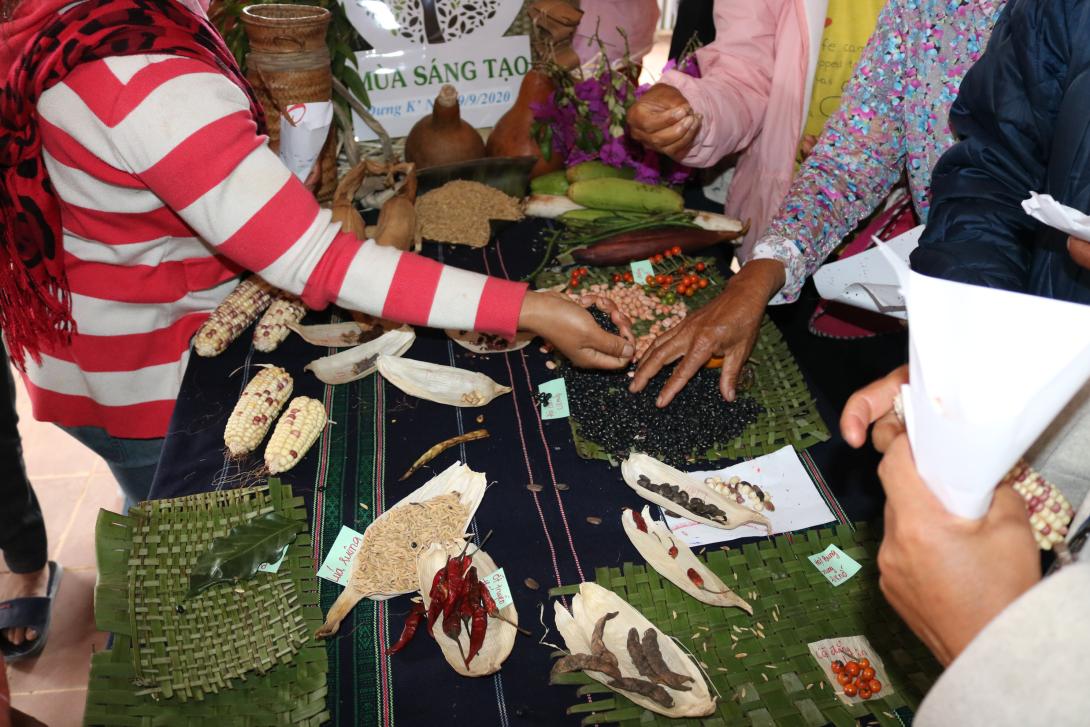
The meeting with the community ended with a seed sharing activity. All local seeds were brought by participants from their respective countries from their regions. A variety and richness is displayed on the seed table. Each seed is a story and culture of a people. Prayers in different languages further revive the value of the seed. Shared seeds help spread life and act as an action for farmer organizations to build a better future for farmers and the world.
On the way back from the seminar, I thought a lot about what I had heard, seen, and understood after this course. The longing to restore local seeds is also rekindling in me. And to create change together, I hope you will join me in thinking and taking action:
If you are a farmer, start by using local seeds and diversifying food sources from your own land.
If you are not a farmer, you can still find ways to grow more vegetables and fruits for your family's meals. If you can't, please support locally sourced food and food sources created using organic farming or ecological agriculture!
Maria Song Tu
Activity Photo Gallery (1)