
Advocacy in Social Work
ADVOCACY IN SOCIAL WORK
Advocacy in social work is a human rights based approach. A rights-based approach to advocacy has several characteristics:
- uncovering conditions of social marginalization
- Aims the responsibility of those with duties or obligations towards the disadvantaged
- focus on bringing about a more equitable distribution of power in society to thereby improve the position of the vulnerable, addressing the fundamental and root causes of rights violations at all levels
- Promote participation because of the belief that everyone, including children, has the right to have a say in decisions that affect them. Rights-based advocacy recognizes clients play a central and proactive role in the process of personal development.
- Requires community/client capacity building so they understand and fight for their rights
I. ADVERTISING CONCEPT
- In simple terms, advocacy is speaking or acting on behalf of oneself or someone else.
- advocacy is also seen as a thoughtful course of positive action to help others secure their rights, represent their interests seek the services they need and express their views and wishes
- According to UNICEF (2010), advocacy is the deliberative process, based on proven evidence, that directly and indirectly influences decision makers, parties and stakeholders to support and implement actions that contribute to ensuring the rights of vulnerable people
- At the national level, advocacy is a method of influencing the government, influencing policymakers, international decision-making bodies through different channels such as conferences, summits, congresses, national or international meetings, political events...
II. TYPES OF DEFENSE
- Policy advocacy: influencing politicians and senior leaders on a national issue and making some proposals to change laws and policies. This approach based on human rights (Human rights based approach) believes that the dire situation of the vulnerable is due to the fact that they have not fully enjoyed the rights they deserve and, most importantly, the way of action, or indifference, of the ruling class has created that situation. Therefore, the advocate seeks to change the actions of senior leadership to benefit the vulnerable
For example: propose social benefits for people aged 75 and older instead of 80 years old as currently
- Program advocacy: targets local leaders to propose action programs or regulate the services of state-owned organizations, ensuring the rights of the people
For example: ask the power company to sell cheap electricity to poor immigrant workers, the local government supports each farmer household affected by the bird flu epidemic with 10 million. Self-advocacy / advocacy: individuals or groups speak up or act for their needs. Social workers build clients' capacity and confidence so that they no longer need outside support but solve problems related to their lives on their own. Social workers have a dynamic role helping them develop their skills in obtaining information, understanding policies and accessing resources to ensure they are heard and accepted.
For example: write a petition because poor households do not receive support during the epidemic season
- Personal advocacy: is when a person who has gone through the same experiences and circumstances as the person being advocated is advocating. It is this similarity that makes both sides understand and sympathize with each other.
For example, a person who has been discriminated because of their disability when applying for employment can become a suitable advocate/peer advocate for another person with a disability who is in the same situation as themselves.
- Collective advocacy: occurs when a group of people come together to campaign /advocate for change at the macro level, influencing the creation of policies, laws based on human rights standards such as requiring more accessible means of transportation, infrastructure… This type of “targeted advocacy” seeks to promote changes that benefit society as a whole. The majority of participating members are like-minded people who want to solve the same problem
For example: Losing shrimp farmers asked the policy bank to reduce interest rates, people who have been reclaiming land for a long time asked the state to recognize land ownership and issue pink books,
- Paraprofessional unpaid advocacy: competent, basic-trained advocate speaks on behalf of the client. They are not a relative of the client but just a member of the community but are ready and committed to the client's interests as a companion and supporter.
For example: Supporting procedures for persons with disabilities to receive social benefits, bringing a lonely elderly household into the parish's rice program
- Paid professional legal advocacy: occurs when a person needs the advocacy and advocacy of a paid professional for a short period of time to help him or her deal with a specific problem, or to help him or her change his or her life. Characteristics of legal advocacy: Usually based on a contractual or financial relationship, the nature of the advocacy issue is beyond the scope of the client's knowledge, complex laws and rules involved in law and courts
For example: defending a sexually abused child in court or a disabled person in a property dispute
III. SOME METHODS/ACTIVITIES USED IN DEFENSE
What are some activities/methods related to advocacy/advocacy work?
- Policy research
- Lobbying
- Sightseeing
- Performance
- Set up website
- Organize meetings
- Newsletter
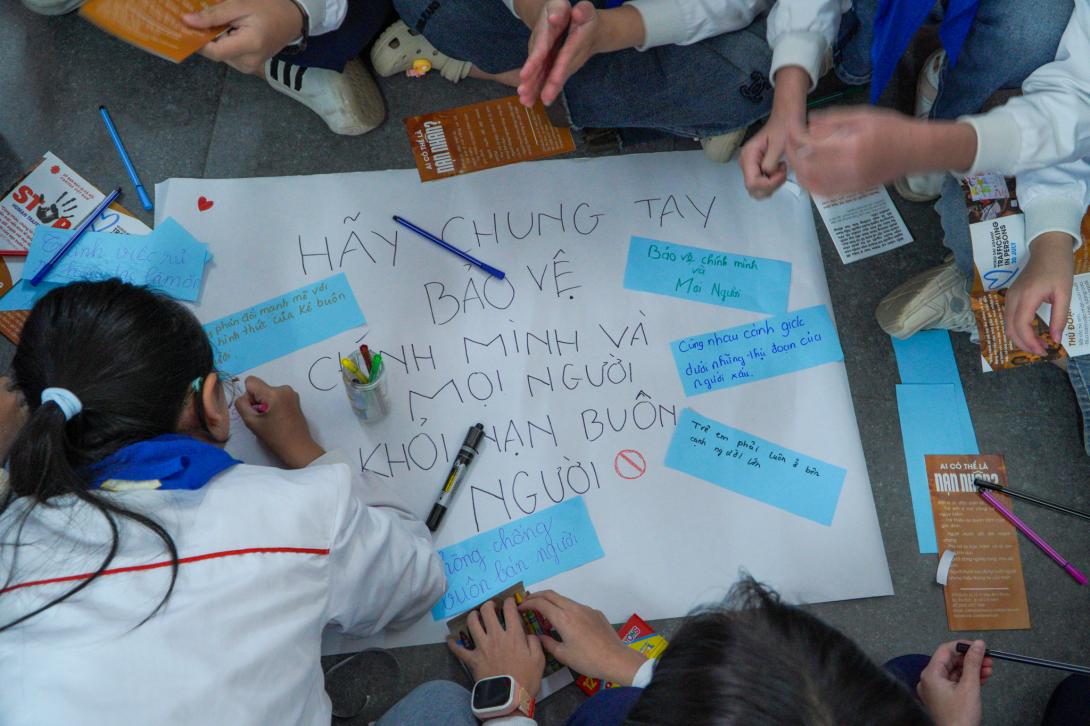
- poster
- Recommendation
- Negotiate
- Press conference
- Protest
- Strike
- Organize competitions
- Investigate
- Visual communication
- Roundtable conference
- Seminar
- Training
- TV/radio drama or video clip
- Send mail
- Interview
- Forum
- Press release
- Mass media
- Event
- ……
IV. ETHICAL PRINCIPLES IN ADVOCATE
- Principle 1 - Act in the best interests of the client: need to determine who we are fighting for, what is the ultimate purpose of those actions, how to steer the client away from a negative goal, defend the client's interests fearlessly, even in the face of hostility. This also means being able to say things that are difficult to say and what the client can't see it all
- Principle 2 - Complete, accurate and timely information to clients: Make clients aware of what is being said and done on their behalf, Everything relevant should be recorded and archived
- Principle 3 - Confidentiality of information (except when the information is harmful to the client himself or others): Keeping confidentiality is a key factor in building a relationship of trust and honesty between both parties. Clients will feel safe if what they say is kept confidential.
V. ADVOCACY / ADVOCACY PROCESS
1. Choose a campaign/advocacy goal
- Defining social problems: The term “social problem” refers to social conditions, processes, and attitudes that are considered negative, and undesirable, to affect and harm society (Jamrozik et al. 1998)
Social issues need to be placed in an analytical framework and answer the following questions:
· What are the issues that need to be defended here?
· Why did the problem appear? What is the root cause of the problem?
· Does it come from personal factors or from socioeconomic inequalities or both?
· Does it happen by chance or for some benefit at the expense of other things?
· What directly caused or contributed to the problem?
· Who is responsible? Who is affected?
· How complex is the problem?
· Can this issue attract the attention of today's diverse group of affiliates?
· What barriers prevent problem solving?
· What is the appropriate and feasible solution? What are the solutions based on available policies?
For example, it is not a problem for parents to export labor to bring economic benefits to the country. However, when children are left at home, spoiled and society is affected, this is a social issue worth worrying about.
- Developing priority goals: Goals in advocacy work need to be commonly and widely understood as the specific things that we want to change, such as a program, policy, institution of the government or an organization
· It is not necessary to select multiple issues at the same time.
· Should choose any problem that can be intervened
Good goal identification checklist
· How achievable is this goal?
· Can this goal solve the current problem?
· Does the goal attract the attention and support of many people? Is it possible to motivate people to take action?
· Can the necessary financial and material resources be mobilized to help achieve the set goals?
· Is it possible to identify the decision-makers that need to be influenced? Know their names and roles?
· Is the goal easy to understand?
· Does the goal have an appropriate, feasible time frame for implementation?
· Are there alliances with individuals or organizations in implementing the goal? And does the goal help foster the building of other coalitions such as NGOs, leaders or civil society organizations?
· Does the goal create opportunities for stakeholders to learn and participate in the process?
For example: Problem: Most street children and youth in big cities like Ho Chi Minh City and Hanoi do not have access to HIV/AIDS treatment programs because they do not have stable housing
Advocacy goal: enact policy to expand HIV/AIDS treatment programs to homeless populations including children and adolescents
Specific solutions: temporary shelters for people transitioning to AIDS, street access health workers, mobile treatment services
Implementation time: 2 years
2. Use data for advocacy/advocacy work
- understand and analyze compelling data for advocacy work. Good data is also a solid basis for convincing arguments
- Statistics are often used to create public interest in social issues. But before being convinced by statistics, we need to understand the context of their birth
- Things to learn are: Issues that statistics reflect, measurement methods, origin of data, how to interpret statistical data
3. Identify who needs impact
- Direct audience: includes decision makers (usually related to government), and that decision directly impacts the advocacy objective
- Indirect audiences: individuals or groups that can influence decision makers. Note: indirect audiences can also be individuals or groups with opposing opinions to your goals - put them on the list to approach and work with them.
4. Develop and deliver the message
Identify the message that causes the audience to take action. The “message” is always developed concisely and directly meets the campaign goals. Sometimes the message also includes encouragement to take actions that we want the target audience to take
5. Build alliances and source relationships
- The strength of advocacy is often linked to the number of people who will support the advocacy cause. The participation of many people representing diverse interests can strengthen advocacy work and build political support.
- Building coalition relationships is ensuring advocacy work gets results. A coalition is a group of people and organizations with whom we can share information, opportunities, skills, and resources to build collective strength. Alliances can provide new ideas and ways of thinking related to the issues that need advocacy, share knowledge and experiences, support initiatives and increase collective power, easily Work directly with marginalized subjects/communities and those most affected by the issue, create a wide network and can turn into a movement
- Sourcing is gathering the necessary resources, calling on people to invest time and effort, money….in advocacy work
6. Develop implementation plans and strategies
- identify the types of advocacy that can help achieve the goals set out in step #1
- Identify necessary advocacy methods/activities
- identify people, timing and expected results
7. Execute the plan:
- This is a decisive stage in the entire advocacy and advocacy process. In it, you use alliances along with tactics to influence decision makers to take action.
- Can choose or combine different advocacy methods to achieve high results.
- This stage needs to be done very carefully and with thorough preparation
- Use alliances with tactics to influence decision makers to take action.
8. Evaluate advocacy work
- Assess the extent to which goals have been achieved, considering impacts
- Set out strategies for improvement if not achieved
- ensure effective application of the policy
VI. SOME SKILLS USED IN DEFENSE
1. Skills in crafting advocacy messages
The necessity of message in advocacy
Messages are always an interesting part of building advocacy goals. However, the message is not the same as the goal, and sometimes the message is built like a slogan: impressive and easy to remember.
Reality shows that message content is not always the most important factor. Other factors that need to be considered include: who will deliver the message, when and where the message will be delivered, and sometimes an effective message is not necessarily “delivered” but “delivered”
Characteristics of a good message
A good message includes 5 aspects:
- Content/idea: What idea do you want to convey? How will you persuade the target audience? The content of the message needs to clearly reflect what you want to achieve; why this needs to be achieved (and what the consequences will be if it is not); how you plan to achieve it; and finally what you want the object to do. Effective messages are often designed with positive content and words. For example, for children and people with H, those words are often “family,” “independence,” “healthy, “community.”
- Language: What words do you choose to make your message clear and unambiguous? What words should not be used?
- Message sender: who will the target audience pay attention to and respond positively to? People whom the target trusts
- Context: how can your message be most effective? For example: in a meeting, a letter, broadcast on television, newspaper article?
- Time and place: when is the best time to deliver the message? Where will your message become worthy of attention and trust?
Message to policy makers and decision makers
- Much of advocacy work is aimed at influencing policymakers and those who can influence them. Policy makers include state officials and leaders of current ministries in the sectors you are intending to influence for improvement, for example the Ministry of Health, the Ministry of Education and the Ministry of Labor, Invalids and Social Affairs; Agencies and individuals that can influence ministries include the Center and Committee for HIV/AIDS Prevention and Control, and the People's Committee at the Provincial/City level.
- Message content needs to be short, concise and convincing
- Even if policymakers are not politicians, it is convincing that their interest in supporting the message will help their position.
- Budget benefits arguments are also a strategy to use effectively when necessary.
- Some forms and ways of conveying messages: Arranging a formal meeting, taking advantage of informal discussion opportunities at cultural and social events, writing personal or organizational letters, organizing visits, activities to care for the disadvantaged
For example: More and more children under 6 years old are dying because of lack of access to ARV drugs. Although the annual investment budget of the PEPFAR fund for HIV/AIDS treatment programs in Vietnam has increased, the rate of children with H who cannot access treatment drugs is still very low compared to the number in need - especially among street children with H.
Investing a small amount of the budget to treat children with H will help save thousands of lives who are anxiously waiting. We look forward to a meeting with you to discuss this important issue in more detail.
Message to mass media agencies
- A mass information agency is any agency with an information system designed to reach the majority of the community. Mass media agencies are tools that have a very large and widespread impact on the community and policy makers and implementers. To carry out their functions, information agencies can use many means such as radio, newspapers, online newspapers, television, and magazines.
- Necessary message content: The press often wants to know how issues have affected individuals, and articles about real lives are often favored. Mass media agencies are also very interested in "hot" news that is of interest to society or stories related to issues that society is talking about.
- Some forms and ways of conveying messages: Press releases, press events, stories and illustrations posted on websites
For example: The quote below is an article on Tuoi Tre Online, dated Friday, January 1, 2010:
Don't call my child "OVC child"
TTO - This morning, January 1, I met Ms. H. in hamlet 2, Dien Hong commune, Dien Chau district (Nghe An) with her eight-year-old son coming back from celebrating Tet and receiving gifts in the district. I saw her sad face. When I asked the reason, Ms. H. burst into tears: "From the big guys to the little guys, everyone calls my son Nam OVC, the kids in the village also call him OVC, and I don't know when my son Nam has a new name..."
"In the district, where the children celebrate Tet, there is also a large printed sign: "Welcoming the New Year for OVC children". The ladies and girls who brought their children to receive gifts felt very uncomfortable with the name OVC for their children and grandchildren. They thought it was just my children, but it turns out the word OVC is for all children in pitiful circumstances," Ms. H said.
OVC children - children with HIV or affected by HIV - think they should only be used in writing, but in addressing or communicating with children and relatives of children in the above category, we should find appropriate words to not cause them to feel guilty in the community.
TRAN CANH YEN
(http://tuoitre.vn/tin/chinh-tri-xa-hoi/20100101/dung-goi-con-toi-la-tre-ovc/356349.html)
2. Bargaining/negotiation skills
Define
- In advocacy work, negotiation/negotiation can be understood as the behavior and process in which two or more parties exchange and discuss common concerns and points of disagreement to come to an agreement.
- Use bargaining/negotiation when the issue is legal and can be negotiated/negotiated, This issue does not need to be litigated, Usually issues related to purchasing, debt, basic needs
Bargaining/negotiation process
Prepare for bargaining/negotiation:
- Determine the negotiation/negotiation objective What do you want to negotiate/negotiate? What do you want to achieve? (For example, I want to add a friendly clinic for the homeless). Related to what (money, sales, conditions...)? What can I do to achieve my goals? What is the strategy/plan? What documents/means/tools are needed to achieve the goal?
- Get to know the other side: Who will directly negotiate? Position? Male or female? Nationality? Why do they negotiate? What does the other side want to achieve in that bargain/negotiation? What form of reward or incentive can make the other party accept cooperation? What are the opponent's capabilities?
- Assert yourself as a negotiator/negotiator: strengths, weaknesses, Level of understanding of the issue to be negotiated, abilities (observation, judgment and decision-making capacity, Confidence, Self-control, Ability to express, Ask and answer questions, Flexibility to improvise
- Determine what might be lost in the bargain/negotiation
Conduct negotiation/negotiation:
- Approach partners (meet in person, write email or phone...) to make an appointment to negotiate salary. Try to be open about the reason for contact
- Make a good impression right from the start: Costume, Address, Demeanor, Sincerity, Maturity...
- Control the bargaining/negotiation: understand the cost of each party, aim to achieve goals and maintain future relationships, master the bargaining/negotiation atmosphere,
- Be flexible throughout the bargaining/negotiation process in case the partner decides to change the direction of the agreement, think quickly when things start to go wrong and there is a risk of not achieving the desired goal
- Know your limits and the other person's needs
- Build a peaceful atmosphere: be truly calm, avoid emotional outbursts, don't act like you're exceptionally intelligent, pay attention to your partner's presentation, don't interrupt, don't rush to answer, present your opinions confidently, comfortably and fluently, with great persuasiveness
- Focus on the interests of both parties, don't argue about positions
- Praise your partner at the right time and sincerely
For example: Ms. Bich - with a mild eye defect was accepted into a garment factory and received 80% salary compared to colleagues with the same productivity.
After negotiation/negotiation:
- Once an agreement has been reached, it needs to be written down on paper with signatures from both parties. This is not always possible or practical, so consideration should be given to the timing of the agreement. In most negotiations/negotiations, one party will send letters and faxes to the other party in which the agreement is drawn up to form the legal basis. If the other party amends the conditions in the written agreement, the amended terms will become part of the agreement, unless we do not agree with that document, and for other reasons...
- Take time to reflect on what has been done by answering the questions: What have we done? What results do those things bring? What haven't we done yet? If we could do it again, what would we change?
Some basic principles
- Avoid prejudice, eagerness to win, weakness, sticking to only one rigid plan, haste, and lack of self-control
- Have a fair and unbiased attitude in negotiations/negotiations. Avoid being influenced by rumors and holding a grudge
- Create an open atmosphere and help the other person build motivation: this will increase their trust
- Focus on the core issue, do not be greedy or raise too many issues at once in negotiation/negotiation
- You can suggest the other person to choose, but avoid setting a deadline to put pressure
- Regularly summarize ideas discussed (or agreed upon), this will increase understanding
- Argue calmly and try to express ideas objectively to defend arguments logically
- Know how to accept the reasonableness of partners/customers' arguments, when necessary
- Try to use a win – win strategy – both win during the bargaining/negotiation process
- Look for other options that are mutually beneficial
- Focus on common concerns rather than each party's individual views
- Maintain a good relationship for future negotiations